



Resources
A collection of free resources to help you raise funds and share the work we do

About our charity
The Mission to Seafarers provides help to the 1.89 million people who face danger every day to keep our global economy afloat.

What is a seafarer
Support for anyone working in the seafaring industry
Our impact
Providing help for seafarers in over 200 ports around the world.
Our issues
Multiple issues effect Seafarers everyday, learn how we help
Our people
Learn more about the staff that make change happen
Careers
Impacts on the lives of people across the world
Publications
Explore our latest publications, reports, and stories showcasing the impact of our work.

Back
About our charity
The Mission to Seafarers provides help to the 1.89 million people who face danger every day to keep our global economy afloat.
What is a seafarer
Support for anyone working in the seafaring industry
Our impact
Providing help for seafarers in over 200 ports around the world.
Our issues
Multiple issues effect Seafarers everyday, learn how we help
Our people
Learn more about the staff that make change happen
Careers
Impacts on the lives of people across the world
Publications
Explore our latest publications, reports, and stories showcasing the impact of our work.

Where can I get help?
We are here for you 24/7
Download our app
The first digital seafarers’ centre in your pocket.

Find a port
We’re located in over 200 ports in 50 different countries
Family network
Learn more about the community we’re building for seafarers’ families
The Sea
The latest maritime news and safety information for seafarers.
WeCare
An initiative designed to improve the mental health and wellbeing of seafarers
Training
We have a range of e-learning for seafarers and their families
Seafarers happiness index
A platform for seafarers to share their views and be a catalyst for change
Contact our Chaplaincy team
Support for anyone working in the seafaring industry
Back
Where can I get help?
We are here for you 24/7
Download our app
The first digital seafarers’ centre in your pocket
Find a port
We’re located in over 200 ports in 50 different countries
Family network
Learn more about the community we’re building for seafarers’ families
The Sea
The latest maritime news and safety information for seafarers.
WeCare
An initiative designed to improve the mental health and wellbeing of seafarers
Training
We have a range of e-learning for seafarers and their families
Seafarers happiness index
A platform for seafarers to share their views and be a catalyst for change
Contact our Chaplaincy team
Support for anyone working in the seafaring industry

Make a donation
With your help we can be there for everyone that needs us

Events
Learn more about our global programme of events

Legacy
Support us with a legacy gift.
Back
Make a donation
With your help we can be there for everyone that needs us
Events
Learn more about our global programme of events
Legacy
Support us with a legacy gift.
July 2026
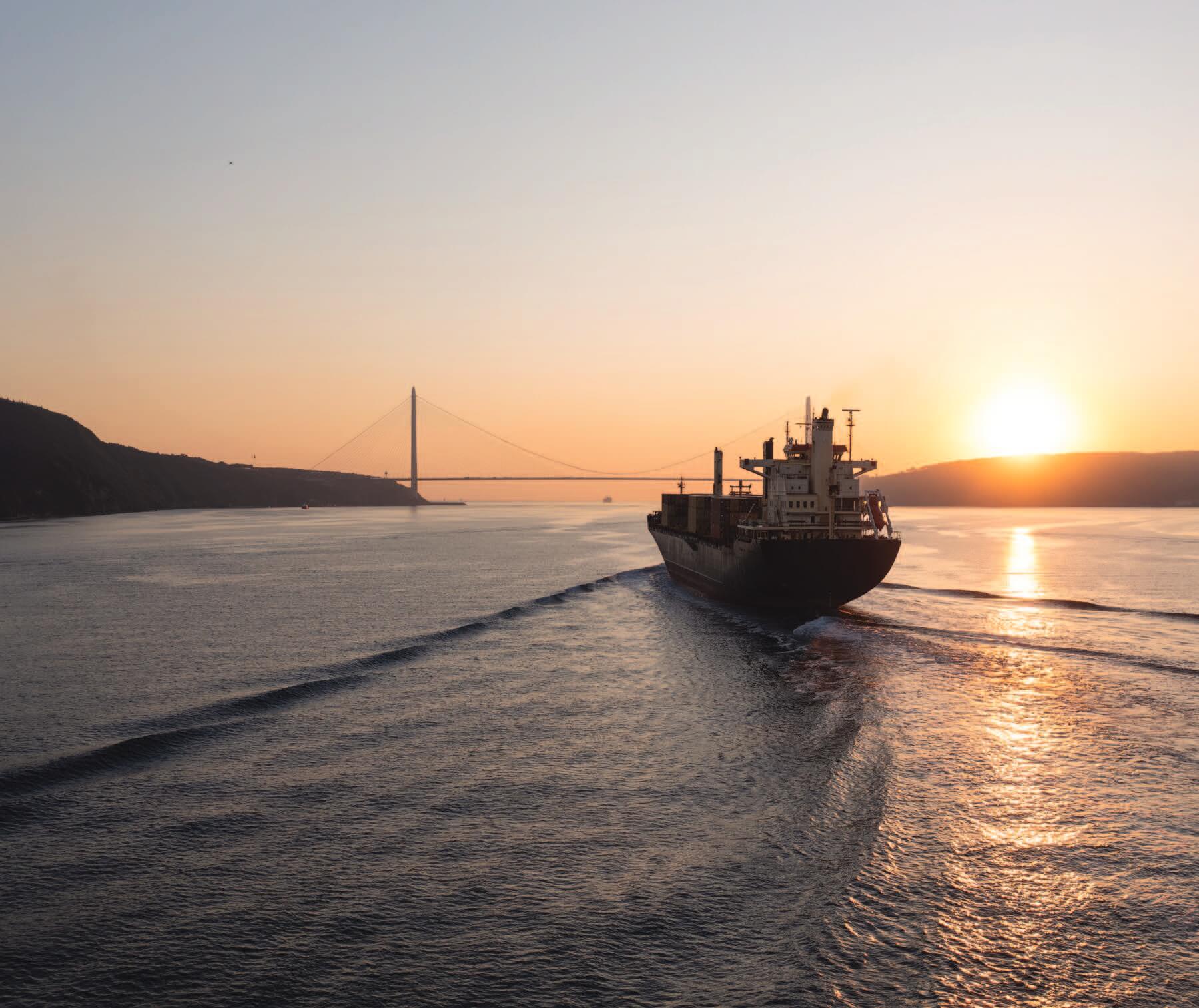
The Strait of Hormuz has dominated headlines in recent months. Yet amid persistent coverage of geopolitical tensions, the plight of tens of thousands of seafarers in the region has gone unreported.
According to the International Maritime Organization (IMO), the effective closure of key transit routes has already impacted more than 20,000 seafarers, although the true figure may be significantly higher. Around 3,000 vessels are delayed or unable to pass through the Strait.
MOUNTING RISKS
For those on board, the risks are stark. One of the Mission’s team managers in the region describes an impossible reality, “Many have no choice but to enter the area, fully aware they may be putting their lives at risk.”
As one seafarer recounted, “Just this morning, two fighter jets passed close while we were still working. There’s no specific hiding place on the ship for this, and we just had to run inside.”
A combination of heightened security threats and operational restrictions has created a perfect storm. Extended deployments, the suspension of shore leave, and the near-total breakdown of crew changes are leaving seafarers exhausted, isolated, and increasingly vulnerable.
“Once again, men and women who set out simply to do their jobs – sustaining global trade and supporting daily life around the world – find themselves in harm’s way,” said Secretary General Peter Rouch. He echoed calls from IMO Secretary-General Arsenio Dominguez, urging vessels to avoid the Strait while conditions remain unsafe.
FILLING CRITICAL GAPS
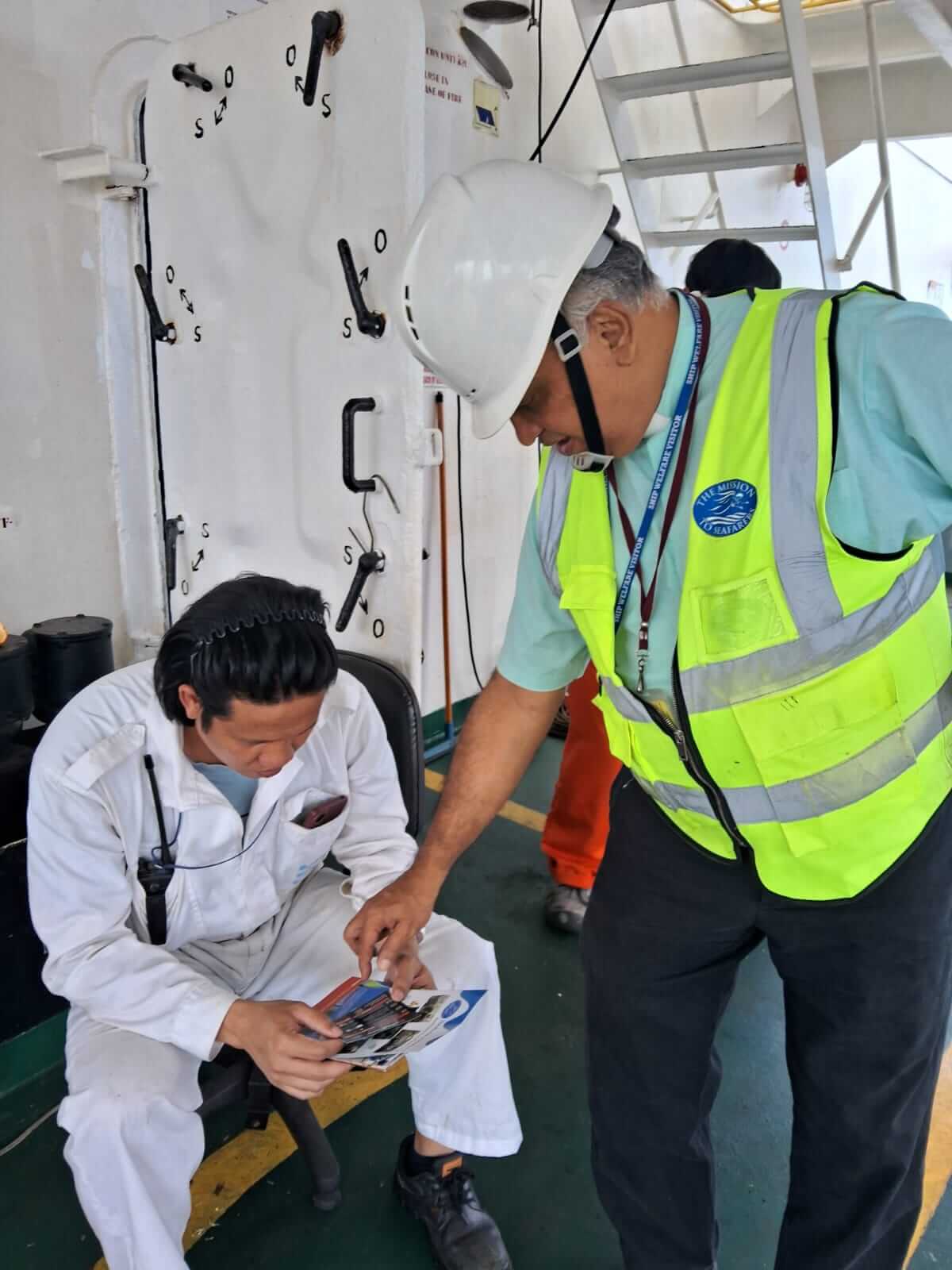
As the crisis continues, frontline welfare teams are working to fill critical gaps in support. Across the UAE, Bahrain, Aqaba (Jordan), and Cyprus, personnel are delivering emergency assistance, welfare checks, and emotional support. Seafarers are also reaching out via WhatsApp, phone calls, and the Happy@Sea app.
Although the Strait of Hormuz remains the focal point, the consequences are being felt far beyond the Gulf.
Recent maritime incidents, including the sinking of the Iranian naval vessel IRIS Dena off Sri Lanka’s southern coast, underscore the broader risks facing crews operating in an increasingly volatile environment.
CONNECTION AND PRACTICAL INTERVENTION
Efforts to maintain human connection have also been stepped up. Teams are expanding both in-person ship visits and virtual outreach, focusing on what one chaplain in Sri Lanka describes as “intentional moments of connection where trust is built.”
“In times of conflict, our mission is both simple and profound: to be present,” the chaplain said. “Showing up consistently and without condition becomes a powerful act of solidarity.”
1.89 million people work at sea, and with your help we can be there for everyone that needs us.