


Resources
A collection of free resources to help you raise funds and share the work we do


About our charity
The Mission to Seafarers provides help to the 1.89 million people who face danger every day to keep our global economy afloat.

What is a seafarer
Support for anyone working in the seafaring industry
Our impact
Providing help for seafarers in over 200 ports around the world.
Our issues
Multiple issues effect Seafarers everyday, learn how we help
Our people
Learn more about the staff that make change happen
Careers
Impacts on the lives of people across the world
Publications
Explore our latest publications, reports, and stories showcasing the impact of our work.

Back
About our charity
The Mission to Seafarers provides help to the 1.89 million people who face danger every day to keep our global economy afloat.
What is a seafarer
Support for anyone working in the seafaring industry
Our impact
Providing help for seafarers in over 200 ports around the world.
Our issues
Multiple issues effect Seafarers everyday, learn how we help
Our people
Learn more about the staff that make change happen
Careers
Impacts on the lives of people across the world
Publications
Explore our latest publications, reports, and stories showcasing the impact of our work.

Where can I get help?
We are here for you 24/7

Download our app
The first digital seafarers’ centre in your pocket.

Find a port
We’re located in over 200 ports in 50 different countries
Family network
Learn more about the community we’re building for seafarers’ families
The Sea
The latest maritime news and safety information for seafarers.
WeCare
An initiative designed to improve the mental health and wellbeing of seafarers
Training
We have a range of e-learning for seafarers and their families
Seafarers happiness index
A platform for seafarers to share their views and be a catalyst for change
Contact our Chaplaincy team
Support for anyone working in the seafaring industry
Back
Where can I get help?
We are here for you 24/7
Download our app
The first digital seafarers’ centre in your pocket
Find a port
We’re located in over 200 ports in 50 different countries
Family network
Learn more about the community we’re building for seafarers’ families
The Sea
The latest maritime news and safety information for seafarers.
WeCare
An initiative designed to improve the mental health and wellbeing of seafarers
Training
We have a range of e-learning for seafarers and their families
Seafarers happiness index
A platform for seafarers to share their views and be a catalyst for change
Contact our Chaplaincy team
Support for anyone working in the seafaring industry

Make a donation
With your help we can be there for everyone that needs us

Events
Learn more about our global programme of events

Legacy
Support us with a legacy gift.
Back
Make a donation
With your help we can be there for everyone that needs us
Events
Learn more about our global programme of events
Legacy
Support us with a legacy gift.
October 2026
India is the third-largest supplier of crews, with more than 311,000 seafarers. “To think we could serve them all adequately on our own would be neither realistic nor sustainable,” says Revd John Attenborough, Regional Director for the Middle East and South Asia.
“Partnership is really important because you’re encouraging local people, local teams and other local entities to come on the journey with you,” he explains.
Partnerships begin in port
For the Mission, so much starts in port. Revd Nitin Dethe, who has been working in Mumbai since 2014, explains, “there was some initial scepticism when we were offering support for free.” But when ports saw there was no ulterior motive, opportunities began to open up.
That trust led to an invitation to serve seafarers inside the Flamingo Club, a duty-free shop. When the facility was demolished, the port approached the Mission and renovated an unused building for welfare support.
Today, a local union has responsibility for the seafarers’ welfare centre, but when it comes to delivering services, it’s Revd Nitin and his team they call upon.
Small connections, big impact
Our staff, including Revd Nitin, Pastor Joel Das in Kolkata and Fr Stephen Thanapaul in Tuticorin, are building partnerships with local services, port authorities, police, diocese, the International Transport Workers’ Federation and the International Seafarers’ Welfare and Assistance Network. Often these connections can seem disparate, but it’s when disasters strike that their value is clear.
Earlier this year, a Turkish seafarer aboard a ship at anchorage sent Revd Nitin photographs of serious abuse. Unable to reach the vessel before it sailed, Revd Nitin was in contact with local police, the navy and the ITF. Within hours, help was on the way. As Nitin observes, “it’s through these kind of partnerships we can escalate things.”
Partnering beyond the ports
But partnerships don’t stop at the port gates. Seafaring is more than a job – it’s a lifestyle. That’s why the work of our Family Support Network (FSN), overseen by Fr Stephen in Tuticorin, is so crucial.
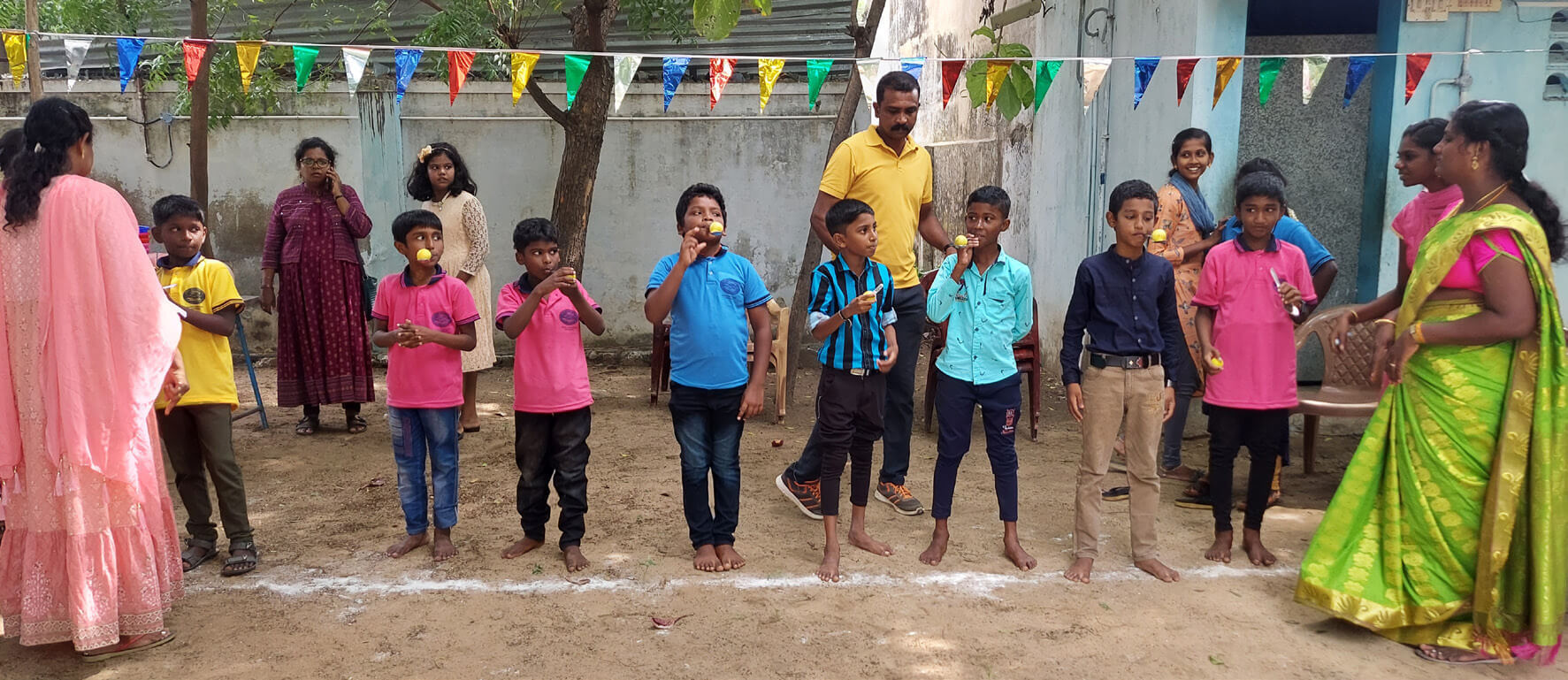
“Each village has its own unique characters and cultures and its own seafarers’ association,” Fr Stephen explains. The FSN works alongside existing structures in 18 communities, helping to establish sewing workshops, tutoring programmes and provide financial education and mental health support – provision they would be unable to access alone.
Starting early
And partnerships begin before seafarers board their first ship. In 2024, safeTALK training helped 253 cadets at the Indian Maritime University become Suicide Alert Helpers. Earlier this year, the Mission signed a partnership with the Academy of Maritime Education and Training in Chennai to deliver its WeCare programme to 3,000 cadets.
“Cadets have been taught how to handle ships, but not how to handle themselves when they’re going through a crisis,” explains Nida Fathima, the Mission’s new Welfare Officer. This partnership will ensure seafarers are well prepared for their demanding career.
Partnerships may take time, but they’re worth every hour of investment – helping us reach more seafarers with more services more quickly.
1.89 million people work at sea, and with your help we can be there for everyone that needs us.