



Resources
A collection of free resources to help you raise funds and share the work we do


About our charity
The Mission to Seafarers provides help to the 1.89 million people who face danger every day to keep our global economy afloat.

What is a seafarer
Support for anyone working in the seafaring industry
Our impact
Providing help for seafarers in over 200 ports around the world.
Our issues
Multiple issues effect Seafarers everyday, learn how we help
Our people
Learn more about the staff that make change happen
Careers
Impacts on the lives of people across the world
Publications
Explore our latest publications, reports, and stories showcasing the impact of our work.

Back
About our charity
The Mission to Seafarers provides help to the 1.89 million people who face danger every day to keep our global economy afloat.
What is a seafarer
Support for anyone working in the seafaring industry
Our impact
Providing help for seafarers in over 200 ports around the world.
Our issues
Multiple issues effect Seafarers everyday, learn how we help
Our people
Learn more about the staff that make change happen
Careers
Impacts on the lives of people across the world
Publications
Explore our latest publications, reports, and stories showcasing the impact of our work.

Where can I get help?
We are here for you 24/7

Download our app
The first digital seafarers’ centre in your pocket.

Find a port
We’re located in over 200 ports in 50 different countries
Family network
Learn more about the community we’re building for seafarers’ families
The Sea
The latest maritime news and safety information for seafarers.
WeCare
An initiative designed to improve the mental health and wellbeing of seafarers
Training
We have a range of e-learning for seafarers and their families
Seafarers happiness index
A platform for seafarers to share their views and be a catalyst for change
Contact our Chaplaincy team
Support for anyone working in the seafaring industry
Back
Where can I get help?
We are here for you 24/7
Download our app
The first digital seafarers’ centre in your pocket
Find a port
We’re located in over 200 ports in 50 different countries
Family network
Learn more about the community we’re building for seafarers’ families
The Sea
The latest maritime news and safety information for seafarers.
WeCare
An initiative designed to improve the mental health and wellbeing of seafarers
Training
We have a range of e-learning for seafarers and their families
Seafarers happiness index
A platform for seafarers to share their views and be a catalyst for change
Contact our Chaplaincy team
Support for anyone working in the seafaring industry

Make a donation
With your help we can be there for everyone that needs us

Events
Learn more about our global programme of events

Legacy
Support us with a legacy gift.
Back
Make a donation
With your help we can be there for everyone that needs us
Events
Learn more about our global programme of events
Legacy
Support us with a legacy gift.
July 2026
There are currently just seven port chaplains working across the region, serving in Panama, Trinidad and Tobago, Costa Rica, Brazil and Argentina.
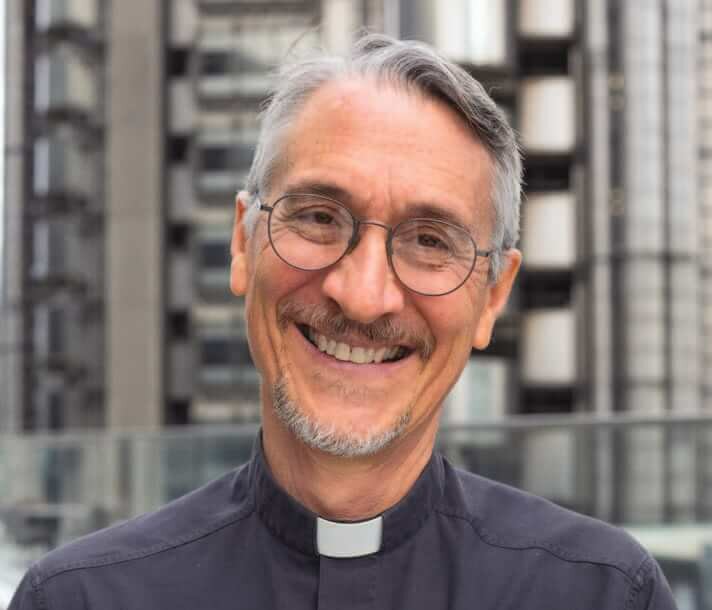
“We’re often working on a knife edge,” says Father Ian Hutchinson Cervantes, the Mission’s Regional Director for Latin America and the Caribbean. “When governments change, port administrations can change too. Personnel move on, and we’re building relationships from scratch again.”
MORE THAN A PAYCHEQUE
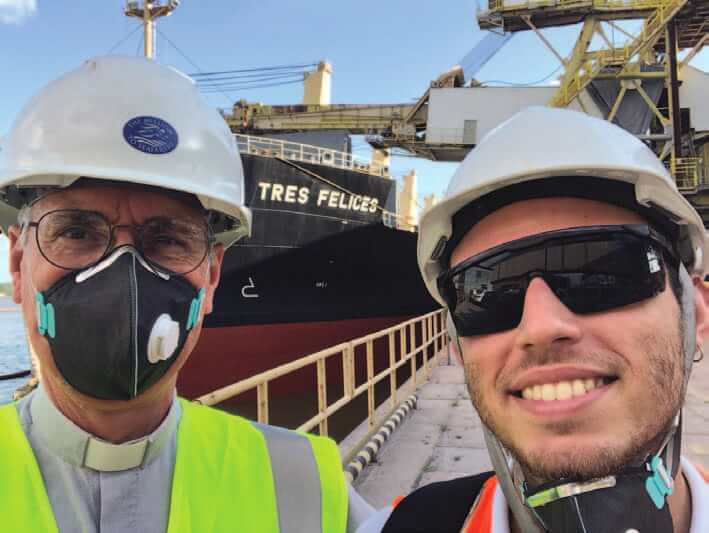
That reality is being felt right now in Vila do Conde, a remote river port in northern Brazil, where chaplain Gabriel Souza is working to regain access following changes in port administration.
In locations like this, bulk carriers can remain offshore for up to two weeks, with strict security restrictions limiting visits.
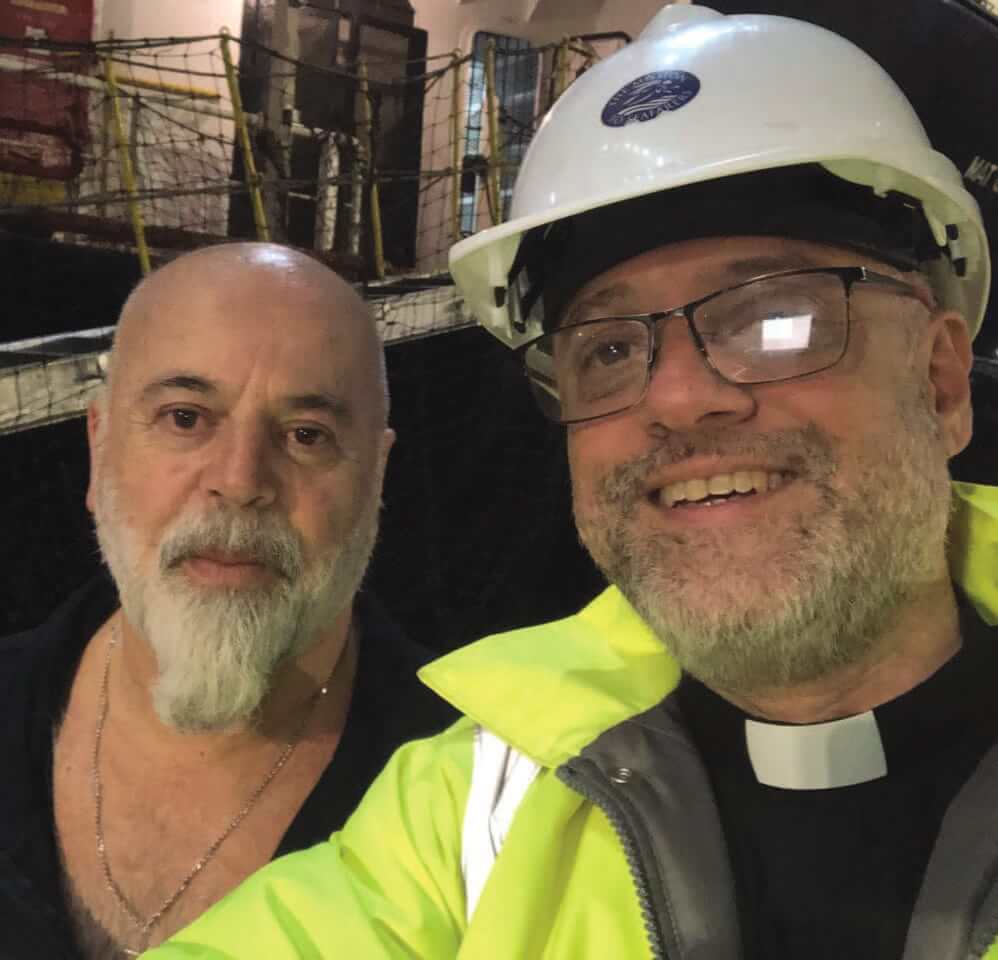
When crews do reach shore, they often face high costs, exploitation by unscrupulous taxi drivers, and even physical danger, so chaplains work hard to protect and support exhausted crews.
“This is not something you do for the paycheque,” Fr. Ian says.
CONTINUITY OF CARE
In response, a new generation of chaplains is emerging, marked by a deep sense of calling.
“I take all new chaplains to the NAMMA (North American Maritime Ministry Association) conference in Houston,” Ian explains. “Then bring them back to Panama, where we train together –
working alongside our German Seaman’s Mission partners so they can see the ministry in action.”
At the heart of this collaborative approach is a commitment to “continuity of care”. Chaplains no longer see their role as ending when a ship leaves port. Instead, they work together across the region, and beyond, to ensure seafarers continue to receive support throughout their journey.
“If a ship leaves our port, we’re asking: who will see them next? How do we make sure they’re not forgotten?” Ian confirms.
INCREASING OPPORTUNITY
This vision is supported by regional collaboration and strong links with local churches.
With growing visibility and increased levels of trust in the Mission, ship visiting is increasing, as are opportunities to expand in new locations, particularly along the Pacific coast.
“If you look at the Pacific seaboard, there is only Panama at present,” Ian explains. “A lot of maritime traffic goes south from there, with final ports of call in Chile.”
Plans are being explored to establish chaplaincy in Valparaíso and Quintero in Chile, as well as in Rosario, Argentina’s key inland port for grain exports.
With vocationally motivated chaplains, supported and connected, there is real potential to build a ministry that ensures no seafarer is ever left without care.
1.89 million people work at sea, and with your help we can be there for everyone that needs us.