


Resources
A collection of free resources to help you raise funds and share the work we do


About our charity
The Mission to Seafarers provides help to the 1.89 million people who face danger every day to keep our global economy afloat.

What is a seafarer
Support for anyone working in the seafaring industry
Our impact
Providing help for seafarers in over 200 ports around the world.
Our issues
Multiple issues effect Seafarers everyday, learn how we help
Our people
Learn more about the staff that make change happen
Careers
Impacts on the lives of people across the world
Publications
Explore our latest publications, reports, and stories showcasing the impact of our work.

Back
About our charity
The Mission to Seafarers provides help to the 1.89 million people who face danger every day to keep our global economy afloat.
What is a seafarer
Support for anyone working in the seafaring industry
Our impact
Providing help for seafarers in over 200 ports around the world.
Our issues
Multiple issues effect Seafarers everyday, learn how we help
Our people
Learn more about the staff that make change happen
Careers
Impacts on the lives of people across the world
Publications
Explore our latest publications, reports, and stories showcasing the impact of our work.

Where can I get help?
We are here for you 24/7

Download our app
The first digital seafarers’ centre in your pocket.

Find a port
We’re located in over 200 ports in 50 different countries
Family network
Learn more about the community we’re building for seafarers’ families
The Sea
The latest maritime news and safety information for seafarers.
WeCare
An initiative designed to improve the mental health and wellbeing of seafarers
Training
We have a range of e-learning for seafarers and their families
Seafarers happiness index
A platform for seafarers to share their views and be a catalyst for change
Contact our Chaplaincy team
Support for anyone working in the seafaring industry
Back
Where can I get help?
We are here for you 24/7
Download our app
The first digital seafarers’ centre in your pocket
Find a port
We’re located in over 200 ports in 50 different countries
Family network
Learn more about the community we’re building for seafarers’ families
The Sea
The latest maritime news and safety information for seafarers.
WeCare
An initiative designed to improve the mental health and wellbeing of seafarers
Training
We have a range of e-learning for seafarers and their families
Seafarers happiness index
A platform for seafarers to share their views and be a catalyst for change
Contact our Chaplaincy team
Support for anyone working in the seafaring industry

Make a donation
With your help we can be there for everyone that needs us

Events
Learn more about our global programme of events

Legacy
Support us with a legacy gift.
Back
Make a donation
With your help we can be there for everyone that needs us
Events
Learn more about our global programme of events
Legacy
Support us with a legacy gift.
October 2026
Jay R Divina, Chief Cook
As a Chief Cook, the pressure can be especially difficult because the galley does not always follow the same working rhythm as other departments.
And, of course, being at sea means missing many of life’s important moments with the people we love. The emotional weight of being away from family can sometimes be just as difficult as the workload itself.
For me, one of the ways I cope is by finding small moments for myself. After long and stressful working hours, I try to disconnect for a while – watching something funny, listening to music, talking with family, or simply having some quiet time. Being able to see and talk to our families gives us a sense of connection and reminds us that we are not alone.
But personal coping is only part of the solution. Mental health should not only be discussed when someone is already struggling. There should be an environment where seafarers feel comfortable saying, “I’m not okay,” without being judged or treated differently.
Ralp Jayson Tolentino, 2nd Officer
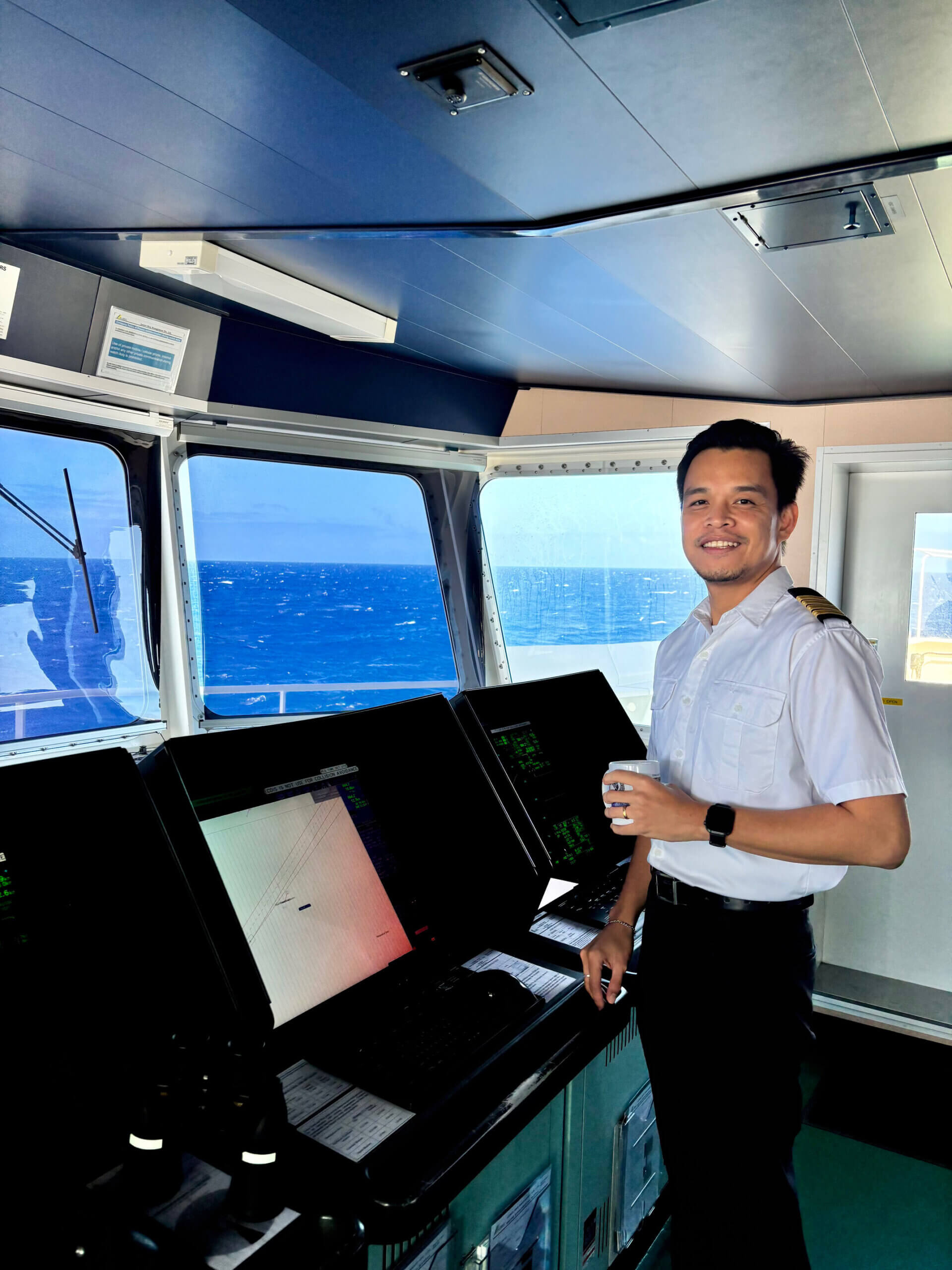
Mental health at sea is shaped not only by a person’s inner strength, but also by connection, working relationships and leadership.
For me, internet access is both a blessing and a challenge. It allows us to be in touch with our families, but too much connectivity can also be emotionally draining. We may receive troubling news, yet we cannot simply leave the ship. We are informed – but sometimes powerless.
When people respect each other, work together and look after each other, the vessel becomes a temporary home. As an officer, I personally try to be the “glue” that helps bring everyone together.
Leadership is not limited to ensuring that work is completed. It means noticing when someone is unusually quiet, creating opportunities for the crew to connect and reminding people that they are valued.
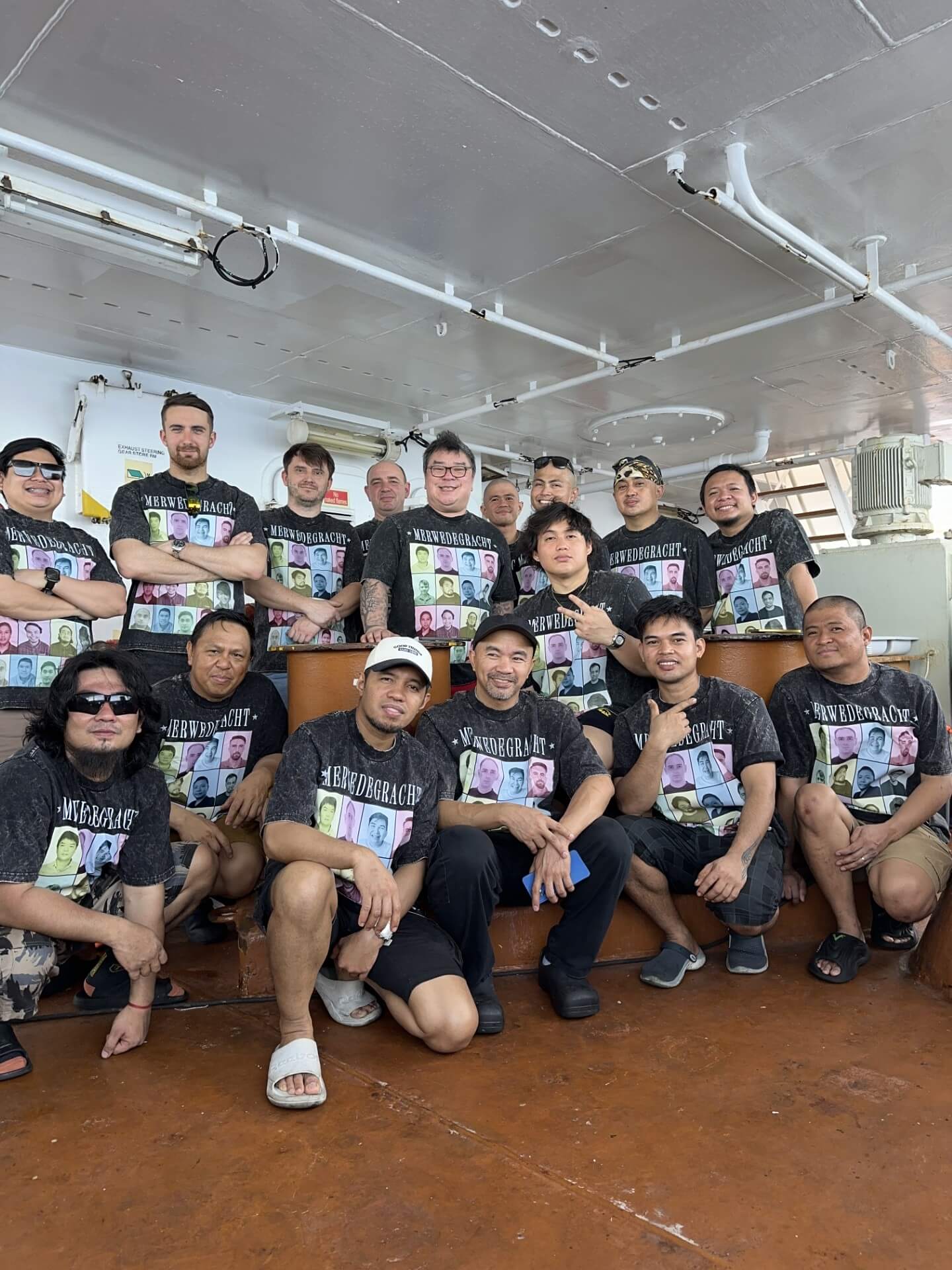
The crew shirt we designed was an example of this. We made something that told the story of our trip. The back displayed the ports we had called at during 2025, similar to a band’s tour shirt. During the holiday season, the shirt reminded us that we were one crew, sharing the same challenges, celebrations, and journey.
Capt. Roi Emmanuel D. Verastigue, MM, AFNI, Master
Most of us carry the silent weight of knowing that, as life progresses back on land at a pace so swift without our presence, we, on the other hand, have to endure the life that is tethered to a monotonous scheme. One may ask, “How do you cope?”
It all boils down to deliberate connection. Connection to oneself and with your community. The saying “no man is an island” is true, after all. Even something as simple as shared laughter during meals can make a huge impact. Go and try to transform your fellow crew from being mere co-workers into a tight-knit support network.
The Bible says, “A good tree does not bear rotten fruit, nor does a rotten tree bear good fruit.” If we are to liken our mind to a good tree that yields great thoughts and clear thinking, we have to, of course, keep the tree – or, in this case, our body in good shape.
Fundamentally, our mental wellbeing at sea relies on how effectively we bridge the gap from isolation to our community, to the people we love and the ones who genuinely care.

1.89 million people work at sea, and with your help we can be there for everyone that needs us.