Resources
A collection of free resources to help you raise funds and share the work we do


About our charity
The Mission to Seafarers provides help to the 1.89 million people who face danger every day to keep our global economy afloat.

What is a seafarer
Support for anyone working in the seafaring industry
Our impact
Providing help for seafarers in over 200 ports around the world.
Our issues
Multiple issues effect Seafarers everyday, learn how we help
Our people
Learn more about the staff that make change happen
Careers
Impacts on the lives of people across the world
Publications
Explore our latest publications, reports, and stories showcasing the impact of our work.

Back
About our charity
The Mission to Seafarers provides help to the 1.89 million people who face danger every day to keep our global economy afloat.
What is a seafarer
Support for anyone working in the seafaring industry
Our impact
Providing help for seafarers in over 200 ports around the world.
Our issues
Multiple issues effect Seafarers everyday, learn how we help
Our people
Learn more about the staff that make change happen
Careers
Impacts on the lives of people across the world
Publications
Explore our latest publications, reports, and stories showcasing the impact of our work.

Where can I get help?
We are here for you 24/7
Download our app
The first digital seafarers’ centre in your pocket.

Find a port
We’re located in over 200 ports in 50 different countries
Family network
Learn more about the community we’re building for seafarers’ families
The Sea
The latest maritime news and safety information for seafarers.
WeCare
An initiative designed to improve the mental health and wellbeing of seafarers
Training
We have a range of e-learning for seafarers and their families
Seafarers happiness index
A platform for seafarers to share their views and be a catalyst for change
Contact our Chaplaincy team
Support for anyone working in the seafaring industry
Back
Where can I get help?
We are here for you 24/7
Download our app
The first digital seafarers’ centre in your pocket
Find a port
We’re located in over 200 ports in 50 different countries
Family network
Learn more about the community we’re building for seafarers’ families
The Sea
The latest maritime news and safety information for seafarers.
WeCare
An initiative designed to improve the mental health and wellbeing of seafarers
Training
We have a range of e-learning for seafarers and their families
Seafarers happiness index
A platform for seafarers to share their views and be a catalyst for change
Contact our Chaplaincy team
Support for anyone working in the seafaring industry

Make a donation
With your help we can be there for everyone that needs us

Events
Learn more about our global programme of events

Legacy
Support us with a legacy gift.
Back
Make a donation
With your help we can be there for everyone that needs us
Events
Learn more about our global programme of events
Legacy
Support us with a legacy gift.
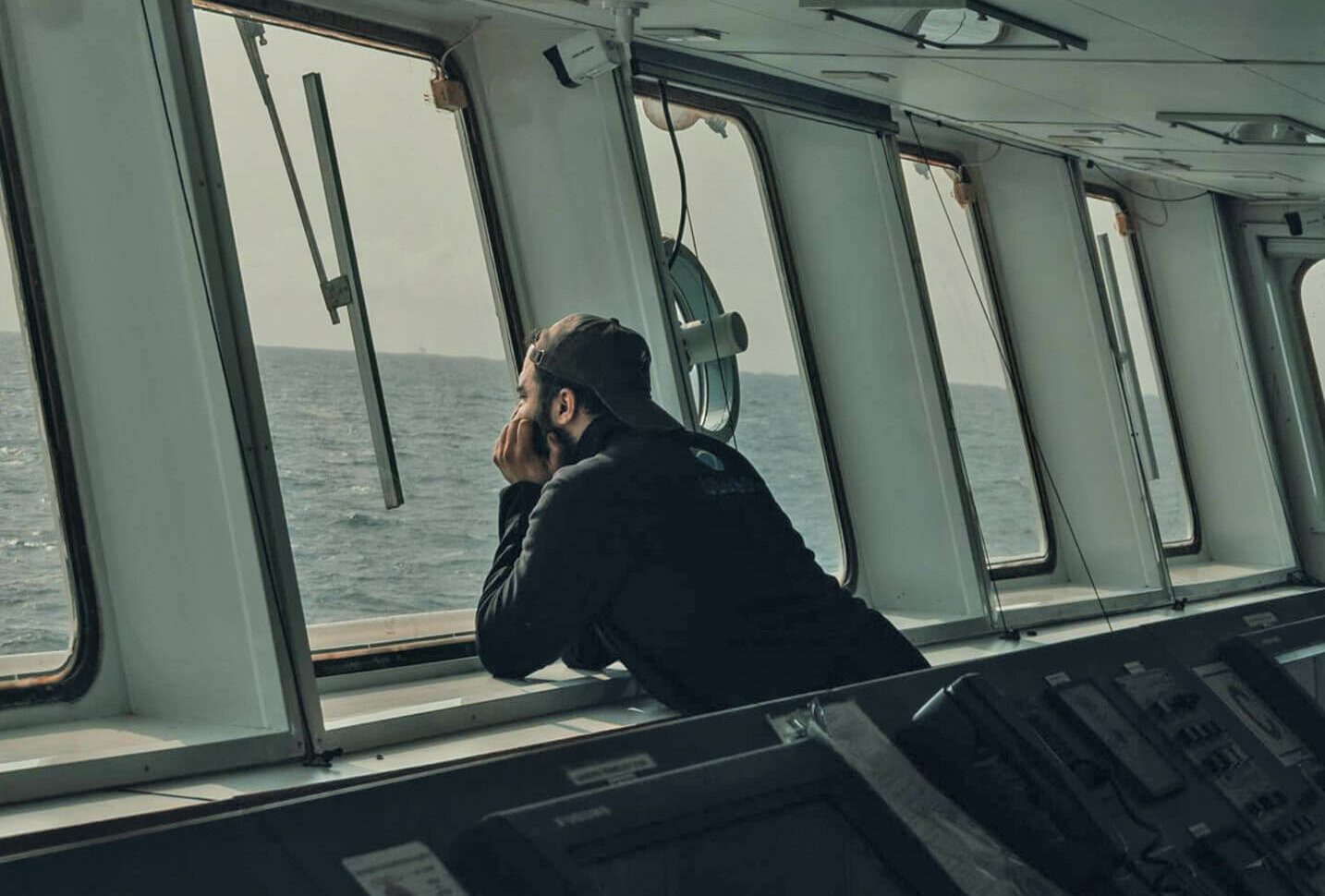
How a seafarer feels is often a combination of on board and shoreside factors
By Sandra Welch and Capt Kuba Szymanski
Tensions in the Middle East have thrust the shipping industry into the global news cycle, sadly framed through the lens of conflict and violence. While periods of geopolitical instability inevitably create uncertainty for seafarers and their families, it is important to recognise that the experience of those working at sea is often more nuanced than it is sometimes portrayed.
It should be noted that the situation in the Gulf and Strait of Hormuz presents very real challenges, chiefly for operators and seafarers in the region, and Gulf nations such as Bahrain, Qatar and Iran. However, despite this regional insecurity, the international shipping industry continues to display its remarkable resilience and an adeptness at finding workarounds when faced with operational challenges, be they geopolitical crises, natural disasters or accidents at sea.
This is also true of seafarers, who are highly skilled and resilient professionals, accustomed to operating in complex and demanding environments, as was evident with the rapid resumption of crew changes on vessels in the Gulf and seafarers returning to work following the resumption of flights a few short weeks after the outbreak of the conflict. This is not, of course, to dispel the very real threat of harm, distress, injury or loss of life merchant seafarers face in conflict afflicted parts of the globe, or the troubling reality that crews continue to find themselves in waters made dangerous by factors and actors far beyond their control.
Faced with emerging and escalating threats, it is absolutely fundamental that as an industry we strive to ensure seafarers have access to safe working conditions, be they at sea or in port. The extraordinary efforts of the IMO’s secretary general, Arsenio Domingo, to this end should be applauded, and serve as an example to the rest of the sector as to what can be achieved through international collaboration and co-operation.
Return to normality
Beyond the headlines, we must also address the common misconception among non-seafarers that time at sea is viewed negatively among mariners, or as a period of isolation and loneliness. Seafarers often view things differently, often viewing time at sea as a return to normality where they can carry out their duties free of pressures and constraints. Less considered are the stresses and anxieties that often arise from the wider pressures that sit around maritime life, such as financial security, family welfare, access to services, career progression and uncertainty beyond an individual’s immediate control.
At the Seafarers Hospital Society (SHS), we have supported the health and welfare of seafarers and their families for more than 200 years. Our experience shows that wellbeing is shaped by a combination of on board and shoreside factors. Economic pressures, concerns about loved ones at home, injury, illness, mental health challenges and difficulties accessing timely support can all have a significant impact on an individual’s welfare, wherever they are located.
Our response is therefore twofold: to provide practical, accessible support for individuals while also working with partners across the maritime sector to address the systemic challenges that affect seafarers’ health and welfare.
One of the key areas where SHS has strengthened support is mental health and wellbeing. We fund free access to Togetherall, a confidential online mental health platform available to eligible seafarers and their families. The service provides 24/7 peer support moderated by mental health professionals, alongside self-help resources and access to counselling. This recognises that seafarers may seek support in different ways and at different times, whether they are at sea, in port or at home.
We have also expanded access to professional counselling through specialist partnerships via Therapy Centre Services, enabling seafarers to receive timely and confidential support when they need it. Early access can make a substantial difference in helping individuals manage stress, anxiety, bereavement or other personal challenges before they become more serious concerns.
Wellbeing, however, extends beyond mental health. Physical health remains a major priority. Working at sea can be physically demanding, with injuries and musculoskeletal conditions common across many parts of the maritime industry. SHS supports working seafarers through initiatives such as fast-track physiotherapy, helping them access treatment more quickly and reducing the risk of longer-term health problems that could affect both their livelihoods and quality of life.
Financial resilience is another critical factor. Prolonged periods ashore due to unexpected illness, family crises, disability or bereavement can place enormous pressure on seafarers and their dependants, with many simply unable to earn money and provide for their loved ones, as opposed to time spent at sea where they are able to earn a living. Through our grants programmes, SHS helps individuals and families facing hardship by assisting with essential costs and unforeseen expenses. By addressing these practical concerns, we can often alleviate some of the underlying stress that affects overall wellbeing.
Advice and guidance
Alongside these direct services, SHS supports the Seafarers’ Advice and Information Line (SAIL), which provides expert advice and guidance on welfare, benefits, debt, housing, employment matters and other issues affecting seafarers, fishers, Royal Navy personnel and their families. Access to trusted information is often as important as financial assistance in helping people navigate difficult circumstances.
In this context, health key performance indicators (KPIs) have an important role to play. In times of crisis, health KPIs need to do more than measure routine activity or compliance. They should help organisations understand whether their systems, people and resources are sufficiently prepared; whether responses are timely and coordinated; and whether learning takes place after an incident. For maritime health and wellbeing, this means moving towards practical, crisis-sensitive measures that capture preparedness, escalation, communication, resilience, recovery and continuous improvement.
This approach aligns with the Seafarers Hospital Society’s Best Practice KPI framework, which uses staged, measurable indicators to help maritime organisations track regulatory compliance, assess the impact of their policies on seafarer health and welfare, and progressively embed health and wellbeing into their culture of care. The purpose is not to create punitive measures, but to provide practical evidence that supports better decision-making, safer onboard care and stronger support before, during and after a crisis.
Ultimately, our goal is not simply to respond to crises, but to help build a maritime sector in which health, welfare and wellbeing are recognised as essential components of operational safety and sustainability.
Seafarers keep global trade moving and play a vital role in the world’s economy. Ensuring they have access to effective health services, welfare support, mental health resources and practical assistance is not only the right thing to do, it is fundamental to maintaining a safe, skilled and resilient maritime workforce for the future.
Sandra Welch is the CEO and Capt Kuba Szymanski is the chair of Seafarers Hospital Society.
1.89 million people work at sea, and with your help we can be there for everyone that needs us.