Resources
A collection of free resources to help you raise funds and share the work we do


About our charity
The Mission to Seafarers provides help to the 1.89 million people who face danger every day to keep our global economy afloat.

What is a seafarer
Support for anyone working in the seafaring industry
Our impact
Providing help for seafarers in over 200 ports around the world.
Our issues
Multiple issues effect Seafarers everyday, learn how we help
Our people
Learn more about the staff that make change happen
Careers
Impacts on the lives of people across the world
Publications
Explore our latest publications, reports, and stories showcasing the impact of our work.

Back
About our charity
The Mission to Seafarers provides help to the 1.89 million people who face danger every day to keep our global economy afloat.
What is a seafarer
Support for anyone working in the seafaring industry
Our impact
Providing help for seafarers in over 200 ports around the world.
Our issues
Multiple issues effect Seafarers everyday, learn how we help
Our people
Learn more about the staff that make change happen
Careers
Impacts on the lives of people across the world
Publications
Explore our latest publications, reports, and stories showcasing the impact of our work.

Where can I get help?
We are here for you 24/7
Download our app
The first digital seafarers’ centre in your pocket.

Find a port
We’re located in over 200 ports in 50 different countries
Family network
Learn more about the community we’re building for seafarers’ families
The Sea
The latest maritime news and safety information for seafarers.
WeCare
An initiative designed to improve the mental health and wellbeing of seafarers
Training
We have a range of e-learning for seafarers and their families
Seafarers happiness index
A platform for seafarers to share their views and be a catalyst for change
Contact our Chaplaincy team
Support for anyone working in the seafaring industry
Back
Where can I get help?
We are here for you 24/7
Download our app
The first digital seafarers’ centre in your pocket
Find a port
We’re located in over 200 ports in 50 different countries
Family network
Learn more about the community we’re building for seafarers’ families
The Sea
The latest maritime news and safety information for seafarers.
WeCare
An initiative designed to improve the mental health and wellbeing of seafarers
Training
We have a range of e-learning for seafarers and their families
Seafarers happiness index
A platform for seafarers to share their views and be a catalyst for change
Contact our Chaplaincy team
Support for anyone working in the seafaring industry

Make a donation
With your help we can be there for everyone that needs us

Events
Learn more about our global programme of events

Legacy
Support us with a legacy gift.
Back
Make a donation
With your help we can be there for everyone that needs us
Events
Learn more about our global programme of events
Legacy
Support us with a legacy gift.
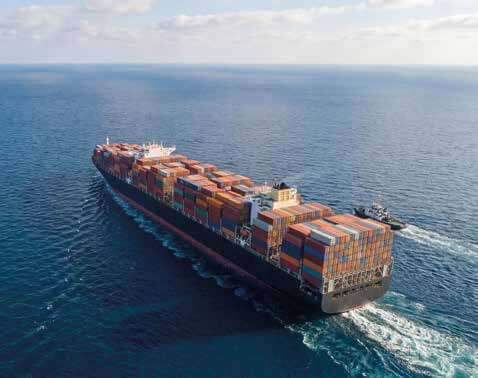
Michael Grey warns that if no ships equals no shopping, no seafarers equals no ships
When was the last time you offered a word of even unsaid thanks to the people who keep your lights on, clean water flowing from your taps, or the drains from overflowing? You have a vague idea that these services exist, but it only really registers when they are interrupted, when we bring down all sorts of imprecations upon their operatives, regardless of what causes the problems.
If people who work in the utilities are so rarely thought of, those hardy folk who run the world’s merchant ships are even more invisible. But even when there are serious interruptions to their operations caused by wars, blockages of canals and straits and the like, the plight of the crews of the ships rarely enter the consciousness of the general public.
People will be wringing their hands about the soaring price of fuel at the pumps, or the cancellation of their holiday flights or non-availability of some products in the supermarket, but their connections to the physical supply-chain only goes so far.
They can just about comprehend the fact that the goods they want are stuck somewhere along the line, possibly on a ship, but fail to probe a little further to consider what it all means to the people who run those vessels.
In the current crisis over the Straits of Hormuz, there are endless discussions throughout the media about prices, commodities, shortages and the legalities of blockades etc., but very rarely does any commentator consider the plight of the seafarers stuck aboard ships, in real hazard, and the difficulty of getting them relief crews in what is in reality a war zone. Nobody asks them what they are feeling about their situation, because, as always, they remain invisible.
Repeating history
As Steven Jones notes on page 6 of this issue, for seafarers in these dangerous places, the situation almost replicates their plight during the pandemic – collateral damage in a far wider human tragedy. Another wise person said, very firmly, that unless we stop treating those who man our ships as if they do not exist, it will become ever more difficult to recruit people into the maritime workforce, and then to retain them. Just think about the loved ones of those seafarers marooned in a war zone – will they not be moving heaven and earth to persuade their seafaring partners or relatives not to give them such anxiety, and take up a safer career ashore? And who would blame them?
It would help, of course, if there was rather more recognition of the role of seafarers in operating the complex network of ships which is so crucial in keeping the lights on and the food on our tables. There is arguably too much talk about exciting developments in the field of autonomous vehicles and the prospects of ships with nobody aboard them. More sceptical and realistic souls suggest that we are probably decades away from this scenario, and we should thus more greatly value the flesh and blood seafarers, whose interventions are as vital to our wellbeing as they ever have been.
“For the bread that we eat and the biscuits we nibble” wrote the poet Masefield, in an early recognition of the importance of the maritime supply chain. The other week the same thought was cleverly summed up in a maritime website by one of the invisible mariners: “NO SHIPPING – NO SHOPPING”, and if the train of thought is carried to its logical conclusion, if there are no seafarers, there will be no ships.
1.89 million people work at sea, and with your help we can be there for everyone that needs us.