Resources
A collection of free resources to help you raise funds and share the work we do


About our charity
The Mission to Seafarers provides help to the 1.89 million people who face danger every day to keep our global economy afloat.

What is a seafarer
Support for anyone working in the seafaring industry
Our impact
Providing help for seafarers in over 200 ports around the world.
Our issues
Multiple issues effect Seafarers everyday, learn how we help
Our people
Learn more about the staff that make change happen
Careers
Impacts on the lives of people across the world
Publications
Explore our latest publications, reports, and stories showcasing the impact of our work.

Back
About our charity
The Mission to Seafarers provides help to the 1.89 million people who face danger every day to keep our global economy afloat.
What is a seafarer
Support for anyone working in the seafaring industry
Our impact
Providing help for seafarers in over 200 ports around the world.
Our issues
Multiple issues effect Seafarers everyday, learn how we help
Our people
Learn more about the staff that make change happen
Careers
Impacts on the lives of people across the world
Publications
Explore our latest publications, reports, and stories showcasing the impact of our work.

Where can I get help?
We are here for you 24/7
Download our app
The first digital seafarers’ centre in your pocket.

Find a port
We’re located in over 200 ports in 50 different countries
Family network
Learn more about the community we’re building for seafarers’ families
The Sea
The latest maritime news and safety information for seafarers.
WeCare
An initiative designed to improve the mental health and wellbeing of seafarers
Training
We have a range of e-learning for seafarers and their families
Seafarers happiness index
A platform for seafarers to share their views and be a catalyst for change
Contact our Chaplaincy team
Support for anyone working in the seafaring industry
Back
Where can I get help?
We are here for you 24/7
Download our app
The first digital seafarers’ centre in your pocket
Find a port
We’re located in over 200 ports in 50 different countries
Family network
Learn more about the community we’re building for seafarers’ families
The Sea
The latest maritime news and safety information for seafarers.
WeCare
An initiative designed to improve the mental health and wellbeing of seafarers
Training
We have a range of e-learning for seafarers and their families
Seafarers happiness index
A platform for seafarers to share their views and be a catalyst for change
Contact our Chaplaincy team
Support for anyone working in the seafaring industry

Make a donation
With your help we can be there for everyone that needs us

Events
Learn more about our global programme of events

Legacy
Support us with a legacy gift.
Back
Make a donation
With your help we can be there for everyone that needs us
Events
Learn more about our global programme of events
Legacy
Support us with a legacy gift.
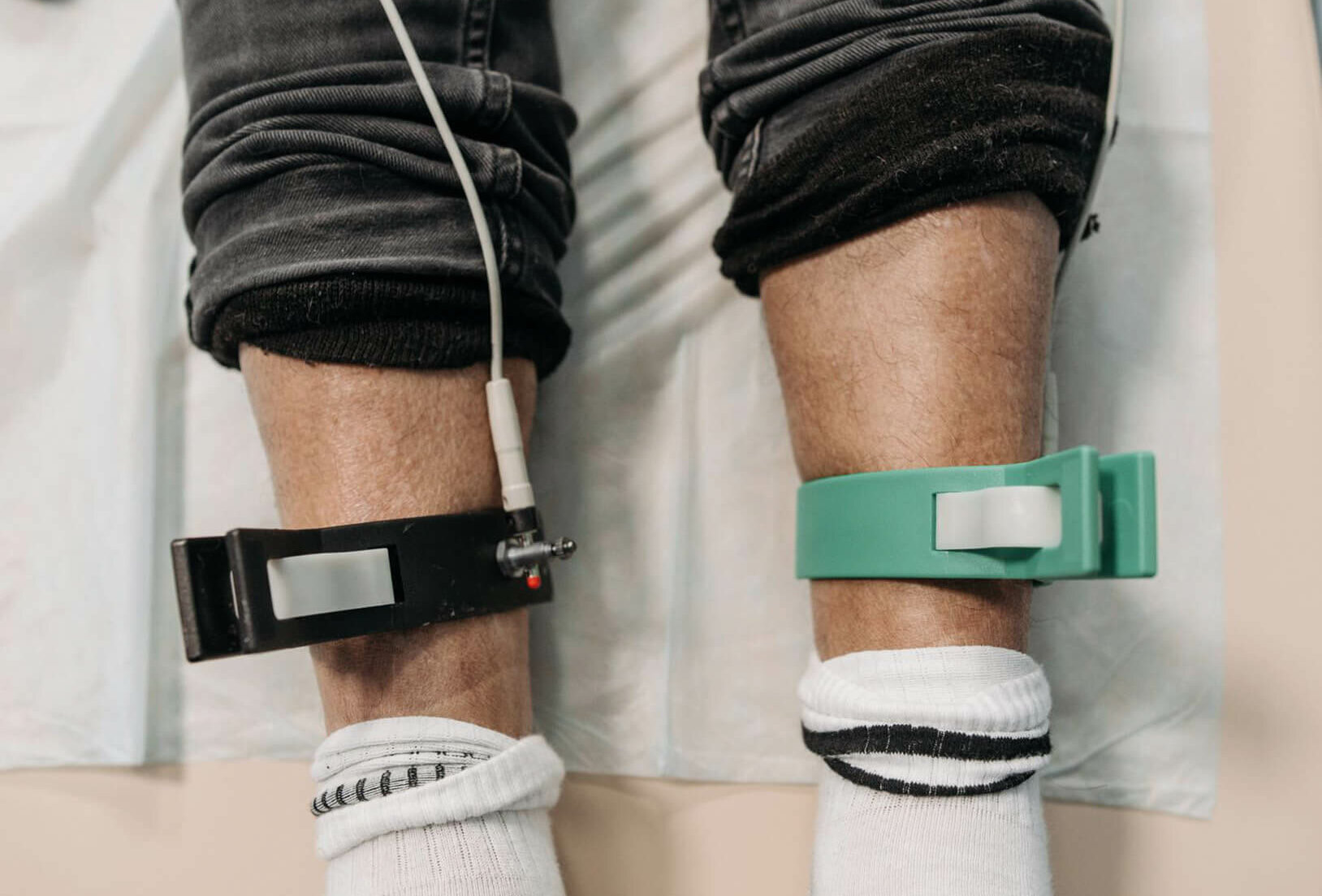
Why seafarers are being asked to speak up about DVT
By Kelly Gerakoudi
Ask most people ashore what Deep Vein Thrombosis (DVT) is, and you’ll get a blank look. Ask a long-haul flyer, and they’ll mention compression socks and getting up to stretch their legs. But ask a seafarer who has stood a full watch on their feet, or spent days confined to a bunk during a long transit to or from a vessel, and you may be closer to someone who has felt the warning signs without ever having a name for them.
That gap between a serious, potentially fatal condition and the everyday realities of life at sea is exactly what a new independent research project is setting out to close.
I’m leading the research, working alongside a top academic surgeon as co-author. The ambition of the research is refreshingly simple: ask seafarers directly about their experiences with swollen legs, leg pain, and DVT, and use those answers to understand a health risk that has, until now, gone largely unstudied in this workforce.
DVT occurs when a blood clot forms in a deep vein, most often in the leg. Left undetected, it can travel to the lungs and become life-threatening. The condition is well documented among long-haul travellers and hospital patients confined to bed, but seafarers face a distinct combination of risk factors that rarely make it into the clinical literature: prolonged immobility during watchkeeping, cramped living quarters, dehydration, long stretches of travel to embark or disembark from vessel, and the general physical toll of life on board. Despite all of this, hard data on how DVT actually affects seafarers is scarce.
That is the gap this research hopes to fill and why it needs seafarers themselves to take part. The project centres on a short, anonymous online questionnaire, open to all serving seafarers regardless of age, rank, or background. It asks about real, lived experience: has a crew member ever noticed leg swelling or pain that seemed unusual, been diagnosed with or treated for DVT, or wondered whether their working conditions played a part? There are no wrong answers. The value of the study lies precisely in capturing the range of what seafarers have actually experienced, not what medical textbooks assume they experience.
Prevention and diagnosis
Alongside the survey, the research is examining how telemedicine tools might help detect, manage, and prevent DVT at sea; a question with real practical weight for an industry where a doctor is rarely just down the corridor. If findings show that certain onboard conditions or routines correlate meaningfully with DVT risk, that opens the door to concrete company policy changes: better guidance on movement and hydration during long watches, revised health screening before and after long-haul travel to vessels, or telemedicine protocols that give crew and shore-based physicians a faster way to flag a problem before it becomes an emergency.
My motivation for the project traces back to the classroom. Many of my shipping management students arrive with no seafaring background at all. Some have never set foot on a vessel before I take them on ship visits as part of their studies. Helping future managers understand what seafarers’ working lives actually look like is central to producing shipping professionals who manage people, not just cargo and contracts.
The results will be written up for an international peer-reviewed academic journal and shared directly with shipping and seafarer welfare organisations, with the aim of feeding into future maritime health policy.
Kelly Gerakoudi DBA is assistant professor of shipping management at Deree, The American College of Greece. She is the author of Introduction to Shipping: A Modern Guide to the Maritime Industry and series editor of Routledge Practical Handbooks in Shipping Management. In addition, she hosts The Greek Shipping Podcast and ShipTalk Vodcast, engaging industry leaders and promoting dialogue between academia and the global maritime community
1.89 million people work at sea, and with your help we can be there for everyone that needs us.