Resources
A collection of free resources to help you raise funds and share the work we do

About our charity
The Mission to Seafarers provides help to the 1.89 million people who face danger every day to keep our global economy afloat.

What is a seafarer
Support for anyone working in the seafaring industry
Our impact
Providing help for seafarers in over 200 ports around the world.
Our issues
Multiple issues effect Seafarers everyday, learn how we help
Our people
Learn more about the staff that make change happen
Careers
Impacts on the lives of people across the world
Publications
Explore our latest publications, reports, and stories showcasing the impact of our work.

Back
About our charity
The Mission to Seafarers provides help to the 1.89 million people who face danger every day to keep our global economy afloat.
What is a seafarer
Support for anyone working in the seafaring industry
Our impact
Providing help for seafarers in over 200 ports around the world.
Our issues
Multiple issues effect Seafarers everyday, learn how we help
Our people
Learn more about the staff that make change happen
Careers
Impacts on the lives of people across the world
Publications
Explore our latest publications, reports, and stories showcasing the impact of our work.

Where can I get help?
We are here for you 24/7
Download our app
The first digital seafarers’ centre in your pocket.

Find a port
We’re located in over 200 ports in 50 different countries
Family network
Learn more about the community we’re building for seafarers’ families
The Sea
The latest maritime news and safety information for seafarers.
WeCare
An initiative designed to improve the mental health and wellbeing of seafarers
Training
We have a range of e-learning for seafarers and their families
Seafarers happiness index
A platform for seafarers to share their views and be a catalyst for change
Contact our Chaplaincy team
Support for anyone working in the seafaring industry
Back
Where can I get help?
We are here for you 24/7
Download our app
The first digital seafarers’ centre in your pocket
Find a port
We’re located in over 200 ports in 50 different countries
Family network
Learn more about the community we’re building for seafarers’ families
The Sea
The latest maritime news and safety information for seafarers.
WeCare
An initiative designed to improve the mental health and wellbeing of seafarers
Training
We have a range of e-learning for seafarers and their families
Seafarers happiness index
A platform for seafarers to share their views and be a catalyst for change
Contact our Chaplaincy team
Support for anyone working in the seafaring industry

Make a donation
With your help we can be there for everyone that needs us

Events
Learn more about our global programme of events

Legacy
Support us with a legacy gift.
Back
Make a donation
With your help we can be there for everyone that needs us
Events
Learn more about our global programme of events
Legacy
Support us with a legacy gift.
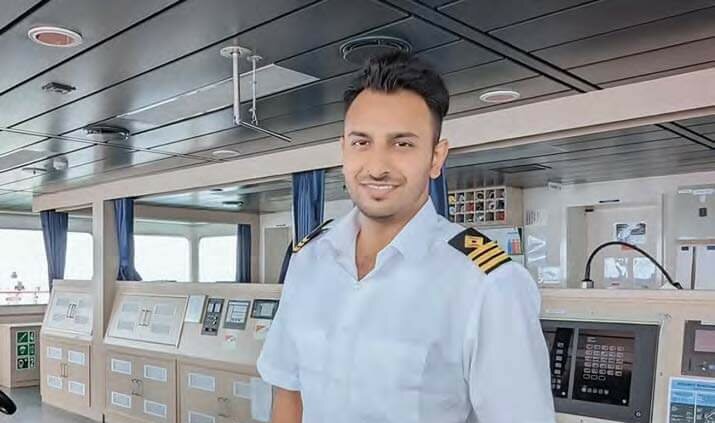
Capt Animesh Nagpaul offers a seafarer’s view on AI camera technology on board ships
For much of my career at sea, safety was largely retrospective, something we analysed after an event had already occurred. We relied on accumulated experience, post-incident reviews, and traditional inspections, often learning lessons the hard way. Today, AI-enabled camera systems offer the promise of transforming this, shifting maritime operations from reactive responses to proactive risk identification and mitigation.
Having spent nearly 15 years on board tankers and now working ashore with modern maritime technology at Smart Ship Hub, I have observed both the scepticism and the potential associated with AI camera systems. The question is no longer if such technologies will become part of the seafarer’s toolkit; rather, it is whether they will be implemented in ways that genuinely support seafarers and enhance safety without undermining trust or operational autonomy.
Life at sea is inherently demanding – long hours, complex cargo operations, dynamic weather, and high-risk decision points are part of every voyage. As a master mariner, I bore ultimate responsibility for vessel safety, crew welfare, cargo operations, and environmental protection. Despite this responsibility, there were natural limits to what any individual or even an experienced bridge team could see or absorb at any given moment. Fatigue, weather conditions, and simultaneous operational demands all influence situational awareness.
Promise and perception
AI-enabled camera systems enter this context with bold claims: constant vigilance, real-time alerts, and objective monitoring across the vessel. From a safety perspective, these are compelling benefits. However, from the seafarer’s viewpoint, legitimate concerns persist. Cameras on board ships are not only operational tools; they interact with spaces where crew live and work daily. When introduced without clarity or context, they can be perceived as surveillance tools rather than safety enhancements.
Having witnessed critical operations at sea and now supporting vessels through Smart Ship Hub’s data-driven platforms, I believe the reality lies between the extremes. CCTV cameras with added capabilities or built-in AI cameras can enhance situational awareness, reduce risk, and contribute to better decision-making, but only if implemented with clear purpose, robust governance, and respect for human expertise. This is not about replacing seamanship with algorithms; it is about using technology to reinforce the fundamental principles of safe and efficient ship operations.
In earlier years, traditional CCTV systems were commonplace. These systems passively recorded footage that was typically reviewed only after an incident. By contrast, AI-enablement adds actionable insights and decision-making capabilities, smart alerts and additional multiple other capabilities that can even be added to CCTV cameras. Companies can either upgrade their CCTV cameras with AI capabilities or introduce AI cameras that come with inbuilt algorithms to actively analyse visual data in real time, identifying unsafe practices, emerging hazards, and anomalous conditions as they occur.
One of the most significant advantages of AI systems is early detection. Rather than waiting for an event to unfold and then piecing together what happened, these systems can alert operators to potential risks before they escalate. This capability supports earlier intervention and creates tangible safety gains.
Operational impact and use cases
From my experience, AI cameras can support a broad range of operational and safety objectives:
• Monitor critical operational areas during cargo handling, mooring, or high-risk activities.
• Enhance situational awareness in poorly visible or high-traffic zones.
• Support crew safety through recognition of unsafe behaviours.
• Improve security in restricted areas and sensitive spaces.
• Time-stamped insights for any incident investigations.
• Maintenance and remote support by having specialists join remotely while the onboard crew is guided step-by-step through the secure mobile app.
• Improve operational standards, with a Standard Operating Procedure for best practices that is included, monitored and managed.
• As a training tool with camera feeds actively used for on board and onshore training footage.
With more than 40 active use cases, such as onboard smoke and fire detection, accidents and potential accident scenarios, unattended progressive conditions, and hygiene-related factors, these systems collectively enhance safety, security, and workplace effectiveness. When properly integrated, they create a shared operational picture for ship and shore teams, enabling more co-ordinated and informed decision-making.
Limitations and considerations
AI camera systems are not without limitations. They require careful configuration, continuous validation, and well-defined parameters to avoid excessive or false alerts. If poorly tuned, they can become distractions rather than tools for improved performance.
Equally important are concerns about privacy and oversight. Crew members work and live in close quarters, and any technology that feels intrusive can erode trust. These concerns are valid and require transparent communication. Crews must understand what is being monitored, why it is in place, and how the data will be used. Clear boundaries, strong data governance, and a safety-first mindset are essential to building acceptance rather than resistance.
It is important to emphasise that AI cameras do not replace the experience, professionalism, or judgement of crew members. Seamanship remains central to safe operations. What these systems offer is consistency and continuous monitoring without the limitations of human fatigue, restricted lines of sight, or competing responsibilities.
In high workload situations, challenging weather, or reduced visibility, AI systems can draw attention to subtle indicators of risk that may not be immediately apparent to a human watchkeeper. In this way, they act as an additional layer of awareness, augmenting rather than substituting human expertise.
When I first began my seagoing career, safety management was largely retrospective. Inspections, checklists, and written reports dominated the safety landscape. Much of the insight came after an event, rather than in real time.
Today, the maritime industry is embracing integrated systems, AI-enabled cameras, advanced sensors, predictive maintenance tools, and cloud-based platforms that allow continuous monitoring and earlier intervention. This represents a fundamental shift in how risks are identified, communicated, and managed on board ships.
Challenges for today’s crew
One of the biggest challenges facing seafarers today is adapting to the rapid pace of technological change. Modern vessels integrate digital systems alongside traditional seamanship skills, often with limited time for training or familiarisation. Resistance to new technology is natural, especially when it is perceived as intrusive rather than supportive.
In my experience, acceptance improves when crews see real value: reduced workload, improved safety outcomes, and clear benefits in their daily operations. Effective training, transparent communication, and a focus on support rather than surveillance are essential to successful implementation.
Having worked both on board ships and ashore with Smart Ship Hub, I see CCTV cameras together with AI enablement or AI camera systems as powerful tools when implemented responsibly. They are not substitutes for experience or professional judgement, but they can enhance safety, improve operational awareness, and strengthen the connection between ship and shore.
Used correctly, AI cameras help crews make better decisions in an increasingly complex operating environment. The key challenge for the industry is to ensure that this technology serves the seafarer, enhancing safety, empowering crew, and reinforcing the human expertise that remains at the heart of maritime operations.
1.89 million people work at sea, and with your help we can be there for everyone that needs us.