Resources
A collection of free resources to help you raise funds and share the work we do

About our charity
The Mission to Seafarers provides help to the 1.89 million people who face danger every day to keep our global economy afloat.

What is a seafarer
Support for anyone working in the seafaring industry
Our impact
Providing help for seafarers in over 200 ports around the world.
Our issues
Multiple issues effect Seafarers everyday, learn how we help
Our people
Learn more about the staff that make change happen
Careers
Impacts on the lives of people across the world
Publications
Explore our latest publications, reports, and stories showcasing the impact of our work.

Back
About our charity
The Mission to Seafarers provides help to the 1.89 million people who face danger every day to keep our global economy afloat.
What is a seafarer
Support for anyone working in the seafaring industry
Our impact
Providing help for seafarers in over 200 ports around the world.
Our issues
Multiple issues effect Seafarers everyday, learn how we help
Our people
Learn more about the staff that make change happen
Careers
Impacts on the lives of people across the world
Publications
Explore our latest publications, reports, and stories showcasing the impact of our work.

Where can I get help?
We are here for you 24/7
Download our app
The first digital seafarers’ centre in your pocket.

Find a port
We’re located in over 200 ports in 50 different countries
Family network
Learn more about the community we’re building for seafarers’ families
The Sea
The latest maritime news and safety information for seafarers.
WeCare
An initiative designed to improve the mental health and wellbeing of seafarers
Training
We have a range of e-learning for seafarers and their families
Seafarers happiness index
A platform for seafarers to share their views and be a catalyst for change
Contact our Chaplaincy team
Support for anyone working in the seafaring industry
Back
Where can I get help?
We are here for you 24/7
Download our app
The first digital seafarers’ centre in your pocket
Find a port
We’re located in over 200 ports in 50 different countries
Family network
Learn more about the community we’re building for seafarers’ families
The Sea
The latest maritime news and safety information for seafarers.
WeCare
An initiative designed to improve the mental health and wellbeing of seafarers
Training
We have a range of e-learning for seafarers and their families
Seafarers happiness index
A platform for seafarers to share their views and be a catalyst for change
Contact our Chaplaincy team
Support for anyone working in the seafaring industry

Make a donation
With your help we can be there for everyone that needs us

Events
Learn more about our global programme of events

Legacy
Support us with a legacy gift.
Back
Make a donation
With your help we can be there for everyone that needs us
Events
Learn more about our global programme of events
Legacy
Support us with a legacy gift.
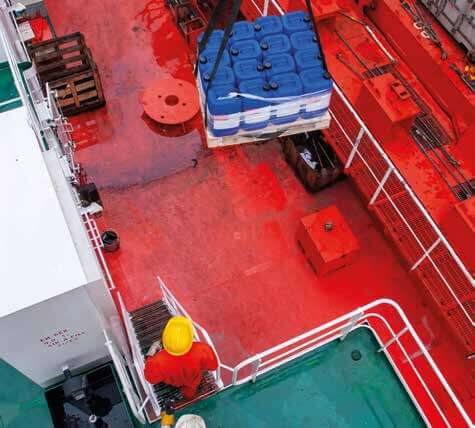
Seafarer health must not be overlooked in the drive to meet the IMO’s net-zero targets
By Dr Jens Tülsner
The maritime industry’s drive towards decarbonisation is both necessary and inevitable. With the International Maritime Organization’s net-zero targets for 2050 shaping the future of global shipping, alternative fuels such as LNG, methanol, ammonia and hydrogen are being introduced to the industry at a rapid pace.
This transition is rightly being framed as essential for our planet’s health. Cleaner fuels promise reduced emissions, regulatory compliance and a more sustainable future for shipping. But amid this race towards greener shipping, there is an issue that deserves far more attention than it currently receives: the health and medical safety of the seafarers expected to work with these new fuels every day.
The reality is simple – while alternative fuels may reduce environmental harm, they also introduce an entirely new range of medical risks on board. Exposure to toxic vapours, chemical burns, inhalation injuries and explosion hazards are not simply theoretical concerns. They are very real occupational dangers tied directly to the fuels now being adopted across the industry.
This creates an uncomfortable truth. Shipping’s green transition cannot be considered truly sustainable if it protects the environment while exposing the very people who keep it afloat to even greater health risks without proper knowledge and training regarding these medical dangers. Currently, medical preparedness is not evolving at the same pace as the rest of related topics in the industry.
Many vessels are being prepared technically for alternative fuels and onboard technology, but not medically. Existing onboard Safety Management Systems and crew healthcare frameworks were suitable for vessels many years ago but are no longer fit for their intended purpose, particularly in settings where fuel related incidents become more likely.
Mind the gap
This gap between environmental progress and crew protection is where the industry must now focus its attention. For shipowners, the first priority should be recognising that decarbonisation is not solely an engineering challenge. It is also a human safety challenge.
Risk assessments must expand beyond emissions and machinery to include fuel-specific medical consequences. What happens if a crew member suffers ammonia exposure hundreds of miles offshore? Is the vessel equipped to respond effectively to methanol poisoning? Are crews sufficiently trained to identify and manage chemical burns caused by new fuel systems? In too many cases, the answer is still no.
Safety Management Systems must therefore evolve. Procedures need updating to reflect the practical realities of handling alternative fuels, including toxic exposure response, specialised protective equipment, emergency evacuation plans and medical treatment protocols specific to these substances. Without these revisions, the industry risks creating vessels that are environmentally advanced but medically underprepared.
Crew training is equally critical. Traditional first aid knowledge alone may not be enough when dealing with fuel-specific hazards. Seafarers working with alternative fuels require practical, scenario-based medical training that prepares them for the distinct dangers and unique challenges that these substances present. These very real risks can include recognising toxic exposure symptoms, responding to chemical burns, managing respiratory emergencies and understanding the unique risks associated with each fuel type. Additionally, training on the best practices to avoid such incidents is equally as important.
A poorly managed medical emergency at sea can jeopardise not only individual wellbeing, but vessel safety and crew confidence handling such fuels moving forward. Medical supplies are another factor that must be acknowledged. Many ships still carry medical chests that, while compliant under existing standards, may no longer serve modern operational risks. As alternative fuels introduce new medical threats, onboard medical supplies must be reviewed accordingly and treatments for toxic inhalation, chemical burns, and fuel-related injuries may all require some improvement.
Current limitations are not restricted to alternative fuels alone. Medical chests often already fall short in areas such as pain management, women’s health and essential medications following current applicable medical standards. The industry risks treating alternative fuels as a new isolated challenge, when in reality they are being layered onto a system that already has structural gaps. If shipping is serious about workforce wellbeing, it cannot allow decarbonisation to become another area where safety is added to a growing list of things that it is catching up on rather than leading the way.
Issues such as women’s health on board remain inconsistently addressed. This is no longer a niche concern given the increasing diversity of the seafaring workforce. Adding new fuel risks to an already imperfect system only increases the urgency for reform.
Humans first
The IMO’s net-zero ambitions are necessary, but environmental regulation must be matched by equal progress in medical and occupational safety standards. This means ensuring that as decarbonisation policies accelerate, so too do international expectations and regulations around crew healthcare, medical inventories, safety certifications and training requirements.
A green transition cannot be considered complete if it overlooks human safety. There is, however, a significant opportunity here. Shipping has the chance not only to lead on environmental sustainability, but also to better integrate crew welfare into major industry transitions. By proactively modernising medical systems alongside fuel technologies, shipowners and regulators can demonstrate that decarbonisation and innovation do not have to come at the expense of those working on board. This is not simply about compliance, it is about responsibility.
Seafarers remain the backbone of global trade, and that importance should be reflected in the way their wellbeing is treated. The maritime industry has long demonstrated its ability to adapt to technical and regulatory change. The challenge now is ensuring that medical safety evolves with equal urgency. The future of shipping should not force a choice between environmental responsibility and human welfare.
To meet the IMO’s 2050 goals successfully, the industry must embrace a broader definition of sustainability, one that recognises protecting seafarers as essential to protecting the future of shipping itself. Alternative fuels may be key to cleaner oceans and lower emissions, but without proper medical safeguards, the burden of that transition risks falling disproportionately on those at sea.
That is a burden the industry cannot afford to ignore. If shipping truly wants to lead on sustainability, medical safety must keep pace every step of the way.
Dr Jens Tülsner is CEO and founder at Marine Medical Solutions.
1.89 million people work at sea, and with your help we can be there for everyone that needs us.