Resources
A collection of free resources to help you raise funds and share the work we do

About our charity
The Mission to Seafarers provides help to the 1.89 million people who face danger every day to keep our global economy afloat.

What is a seafarer
Support for anyone working in the seafaring industry
Our impact
Providing help for seafarers in over 200 ports around the world.
Our issues
Multiple issues effect Seafarers everyday, learn how we help
Our people
Learn more about the staff that make change happen
Careers
Impacts on the lives of people across the world
Publications
Explore our latest publications, reports, and stories showcasing the impact of our work.

Back
About our charity
The Mission to Seafarers provides help to the 1.89 million people who face danger every day to keep our global economy afloat.
What is a seafarer
Support for anyone working in the seafaring industry
Our impact
Providing help for seafarers in over 200 ports around the world.
Our issues
Multiple issues effect Seafarers everyday, learn how we help
Our people
Learn more about the staff that make change happen
Careers
Impacts on the lives of people across the world
Publications
Explore our latest publications, reports, and stories showcasing the impact of our work.

Where can I get help?
We are here for you 24/7
Download our app
The first digital seafarers’ centre in your pocket.

Find a port
We’re located in over 200 ports in 50 different countries
Family network
Learn more about the community we’re building for seafarers’ families
The Sea
The latest maritime news and safety information for seafarers.
WeCare
An initiative designed to improve the mental health and wellbeing of seafarers
Training
We have a range of e-learning for seafarers and their families
Seafarers happiness index
A platform for seafarers to share their views and be a catalyst for change
Contact our Chaplaincy team
Support for anyone working in the seafaring industry
Back
Where can I get help?
We are here for you 24/7
Download our app
The first digital seafarers’ centre in your pocket
Find a port
We’re located in over 200 ports in 50 different countries
Family network
Learn more about the community we’re building for seafarers’ families
The Sea
The latest maritime news and safety information for seafarers.
WeCare
An initiative designed to improve the mental health and wellbeing of seafarers
Training
We have a range of e-learning for seafarers and their families
Seafarers happiness index
A platform for seafarers to share their views and be a catalyst for change
Contact our Chaplaincy team
Support for anyone working in the seafaring industry

Make a donation
With your help we can be there for everyone that needs us

Events
Learn more about our global programme of events

Legacy
Support us with a legacy gift.
Back
Make a donation
With your help we can be there for everyone that needs us
Events
Learn more about our global programme of events
Legacy
Support us with a legacy gift.
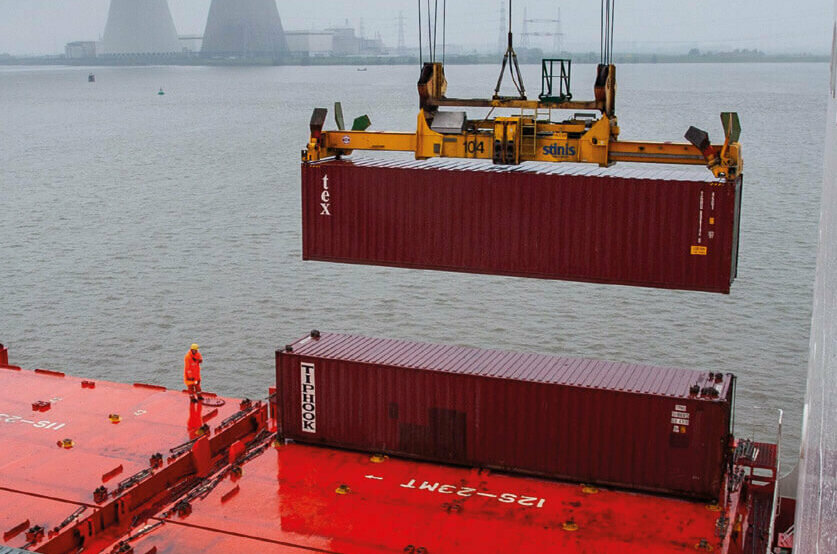
Bridging the gap between guidance and reality when narcotics are found on board
By Leyla Pearson
For any seafarer, the discovery of illegal narcotics on board a vessel is a deeply serious and frightening situation. Even where crew have no knowledge of, or involvement in, criminal activity, the consequences can be life changing. Seafarers can find themselves detained in a foreign country, separated from their families, facing legal systems they do not understand, and treated as suspects simply because they were serving on the ship.
This is one of the most difficult human rights challenges facing our industry. Criminal networks exploit global shipping routes, vessels and ports, often without the knowledge of those working on board. Yet, too often, innocent seafarers bear the consequences.
The 2025 IMO/ILO Guidelines on the Fair Treatment of Seafarers Detained in Connection with Alleged Crimes can assist in such cases. The guidelines were developed to ensure appropriate legal process for seafarers and reinforce existing fundamental principles: that seafarers should be treated fairly and with dignity; that they are presumed innocent unless proven guilty; that detention should not be arbitrary or longer than necessary; and that due process must be followed.
However, there remains a troubling gap between State-agreed guidance and what happens in reality.
We continue to see cases where seafarers are detained for long periods while investigations unfold. Some are held without adequate interpretation or translation. Others struggle to access consular support or legal advice.
Many are left unable to work, unable to return home, missing critical family milestones and experiencing severe deterioration in their physical and mental health.
To every seafarer reading this: it is important to know that your rights matter. If narcotics are discovered on board, you should not be treated as guilty just because of your rank, nationality, or presence on the vessel.
Any investigation should be evidence based. Authorities should consider the realities of life at sea: that seafarers operate across multiple jurisdictions, often with limited control over what happens in ports and terminals or during cargo operations.
That does not mean States should ignore drug trafficking. Far from it. Port and coastal States have legitimate security responsibilities, and the guidelines do not seek to amend national laws and procedures. The maritime industry must continue to support efforts to prevent and investigate criminal activity, but enforcement must not come at the cost of justice for innocent crew.
Reach out
If you are affected by such an incident, it is vital that you ask for support as early as possible. The master, shipowner, flag State, your union, welfare organisations and your consulate may all have roles to play. You should seek clear information about why you are being questioned or detained, request interpretation if needed, and ensure that legal advice is made available. You should also make sure your family is kept informed through the appropriate channels.
For shipowners and industry stakeholders, prevention is essential.
Strong security procedures, crew awareness, port risk assessments and co-operation with relevant authorities all help reduce the risk of vessels being exploited. The International Chamber of Shipping’s Drug Trafficking and Drug Abuse On Board Ship (2025- 2026 Edition) provides comprehensive guidance on preventive measures, regional cooperation frameworks and fair treatment principles, helping companies and crews better understand both the risks and the support available when incidents occur. But prevention alone is not enough. When narcotics are discovered on board, we must also ensure that seafarers receive the assistance they need to navigate what are often complex criminal processes.
The guidelines provide a clear roadmap. They call for co-operation between port States, flag States, coastal States, States of nationality, and shipowners and also provide guidance for seafarers. They recognise that once a seafarer is no longer required for an investigation, they should be allowed to re-embark or be repatriated without undue delay. Where appropriate, options such as financial security should be considered to allow repatriation while proceedings continue.
The challenge now is implementation. It is not enough for maritime authorities to support fair treatment in principle if police, prosecutors and courts are unaware of the guidance in practice. Greater awareness is needed across whole government administrations, not just within transport ministries. Seafarers are essential workers.
Global trade depends on their professionalism, resilience and courage. If we want to attract and retain the next generation, they must know that they will be treated fairly and that their fundamental rights will be respected when things go wrong.
The guidance exists. The principles are clear. Now they must be applied consistently, fairly and urgently – for every seafarer, everywhere.
1.89 million people work at sea, and with your help we can be there for everyone that needs us.