Resources
A collection of free resources to help you raise funds and share the work we do


About our charity
The Mission to Seafarers provides help to the 1.89 million people who face danger every day to keep our global economy afloat.

What is a seafarer
Support for anyone working in the seafaring industry
Our impact
Providing help for seafarers in over 200 ports around the world.
Our issues
Multiple issues effect Seafarers everyday, learn how we help
Our people
Learn more about the staff that make change happen
Careers
Impacts on the lives of people across the world
Publications
Explore our latest publications, reports, and stories showcasing the impact of our work.

Back
About our charity
The Mission to Seafarers provides help to the 1.89 million people who face danger every day to keep our global economy afloat.
What is a seafarer
Support for anyone working in the seafaring industry
Our impact
Providing help for seafarers in over 200 ports around the world.
Our issues
Multiple issues effect Seafarers everyday, learn how we help
Our people
Learn more about the staff that make change happen
Careers
Impacts on the lives of people across the world
Publications
Explore our latest publications, reports, and stories showcasing the impact of our work.

Where can I get help?
We are here for you 24/7

Download our app
The first digital seafarers’ centre in your pocket.

Find a port
We’re located in over 200 ports in 50 different countries
Family network
Learn more about the community we’re building for seafarers’ families
The Sea
The latest maritime news and safety information for seafarers.
WeCare
An initiative designed to improve the mental health and wellbeing of seafarers
Training
We have a range of e-learning for seafarers and their families
Seafarers happiness index
A platform for seafarers to share their views and be a catalyst for change
Contact our Chaplaincy team
Support for anyone working in the seafaring industry
Back
Where can I get help?
We are here for you 24/7
Download our app
The first digital seafarers’ centre in your pocket
Find a port
We’re located in over 200 ports in 50 different countries
Family network
Learn more about the community we’re building for seafarers’ families
The Sea
The latest maritime news and safety information for seafarers.
WeCare
An initiative designed to improve the mental health and wellbeing of seafarers
Training
We have a range of e-learning for seafarers and their families
Seafarers happiness index
A platform for seafarers to share their views and be a catalyst for change
Contact our Chaplaincy team
Support for anyone working in the seafaring industry

Make a donation
With your help we can be there for everyone that needs us

Events
Learn more about our global programme of events

Legacy
Support us with a legacy gift.
Back
Make a donation
With your help we can be there for everyone that needs us
Events
Learn more about our global programme of events
Legacy
Support us with a legacy gift.
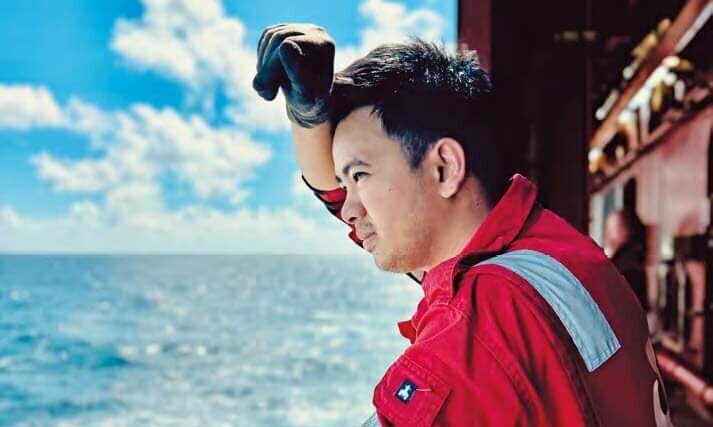
Katie Higginbottom argues that barriers to leave must be addressed for the good of the industry
In April 2025, the ITF Seafarers’ Trust, together with World Maritime University (WMU), released a new report entitled Shore Leave: Rare, Brief and in Danger of Extinction. The title was intentionally provocative; the timing of its release designed to coincide with discussions of amendments to the Maritime Labour Convention (MLC, 2006) at the International Labour Organization (ILO).
Concerns around dwindling access to shore leave are not new. The 9/11 attacks helped to bring about the establishment of the International Ship and Port Facility Security (ISPS) Code with its securitisation of ports that were already moving further from city centres towards more isolated industrial zones. The nostalgic image of seafaring was already very different from reality even before the Covid-19 pandemic.
Our survey of seafarers and subsequent report aimed to quantify current levels of leave in terms of frequency and time spent ashore and to identify barriers to shore leave. A good number of survey responses were received – 5,879 valid questionnaires – a significant and representative sample size. The findings were unsurprising, confirming the suspicions of all those working in the field of seafarers’ welfare and wellbeing: seafarers’ ability to take shore leave has been in decline for some time, nose-dived during the pandemic and has continued to get worse rather than better.
The survey found that more than a quarter of seafarers had had no shore leave at all during their contracts and a third had only one or two instances in a duration that averaged out at 6.6 months on board. Of those who did manage to get a break from their vessels, 47% spent less than 3 hours ashore.
The combination of workload on board and limited time in port make it virtually impossible for seafarers to make time for shore leave. Without sufficient crew on board to cover the workload, the inspections, and the paperwork, companies fail to create schedules that allow for shore leave. We know this from previous research with WMU that revealed that almost 90% of seafarers exceed their hours of work/rest limits at least once a month; 16% exceed the limits more than 10 times/month. In such circumstances seafarers themselves ‘choose’ to remain on board to catch up on sleep, go online or just get the job done.
A Filipino deck rating on a car carrier, having spent 6.5 months on board, said: “…ordinary seaman in a car carrier vessel most likely can’t go out because of the poor work-rest hours at the port by the management, and it is always the problem in every vessel I have boarded. The sad part is that the work-rest hour record on board is fake, and they will not record the actual duty time for this ordinary seaman.”
On top of these challenges, transport costs, port state restrictions, disinterested agents, visa or permit issues and the lack of convenient facilities or attractions compound the problem.
Seafarers are rightfully frustrated: “I have experienced in ports where shore leave is not allowed at present. The excuses given include private port or port authority not allowing it, and COVID-19 restrictions still being in place. Some port agents even say that issuing shore passes will be chargeable. There are many reasons, but in reality, no-one thinks about seafarers. We are the soldiers of the sea, and during COVID we sacrificed so much, yet there is no respect for seafarers,” said an Indian deck officer on a dry bulk carrier, having spent four months on board.
Same results, different responders
Following the survey of seafarers, we analysed the results of our questionnaire to providers of shore-based welfare, which, unsurprisingly, corroborated the findings of the earlier report. Ninety-six responses were received from 83 centres/organisations in 25 countries, thanks to the support for dissemination from the International Christian Ministries Association (ICMA). The key findings of this survey can be summarised as follows:
• Fewer seafarers are spending time ashore in seafarers’ centres – 61% reported a decline in visitor numbers since the pandemic.
• Seafarers’ centres confirm the same primary barriers to shore leave: lack of time in port and excess workload on board.
• Where seafarers are taking shore leave, they have little time to spend ashore, usually less than two hours.
The ITF Seafarers’ Trust report Shore Leave and the Future of Port-Based Welfare reinforced the findings of the survey of seafarers and underlined the risks inherent in the failure to address the situation. If significant efforts are not made to overcome the barriers to shore leave, the centres and other operations that provide essential welfare support services will cease to be viable and then cease to exist. This will result in even fewer opportunities for seafarers to enjoy the benefits of taking a break from the confines of the ship. Seafarers will lose the chance to engage with port communities, to access recreational facilities and to get spiritual and psychological support that can mitigate the pressures of an isolated and stressful working environment.
This is a bleak picture and not one that the maritime industry is overly keen to acknowledge. So, what is to be done? As with many challenges in this day and age, it is essential to remain hopeful and not to despair. There are some positive developments and some positive examples. There is also a lot of work to be done by all who have an interest in the wellbeing of seafarers at all levels. We need a widespread campaign to enshrine the right to shore leave as an immutable principle, combined with multiple focussed projects and actions to dispense with barriers that can be removed at a local level.
The ILO Special Tripartite Committee did approve amendments to the MLC, 2006, adding a new standard (A2.4.2) on shore leave which should enter into force in ratifying countries by December 2027. It requires port States to ensure that seafarers are allowed ashore by public authorities in their ports, without need for visas or special permits. It requires explanation to the seafarer for any refusal with reasons provided in writing. It also requires shipowners to allow seafarers to take shore leave and sets out guidelines for co-operation between shipowners, unions and ‘other relevant stakeholders’ to establish procedures to facilitate shore leave in ports. In addition, it proposes information and training on seafarers’ rights including that to shore leave.
Though there are caveats around safety and operational requirements which could weaken the regulation, it does provide a clear opening for positive conversations and a framework for holding to account those authorities or companies that may lack enthusiasm for upholding seafarers’ rights.
Looking forward
This will, of course, not fix the problem of excessive workload and limited time. A proposed amendment on hours of work was not adopted but a joint working group of the ILO and International Maritime Organization (IMO) to ‘identify and address seafarers’ issues and the human element on hours of work and hours of rest’ was established. This means that while the battle is not won, the issue remains live and a platform exists to present arguments and evidence to challenge the status quo.
This is the international regulatory backdrop that needs to be supported at every possible opportunity locally. As funders, we must continue to maintain and support providers of port-based welfare and work together to overcome barriers and publicise examples of best practice. The solutions will need to be adapted to the circumstances, but those who have survived the Covid years will know, where there’s a will, there’s a way. Next in our sights is a survey of shipowners and operators. It will be interesting to see who is willing to engage and who will designate seafarers’ welfare a priority with an unavoidable cost.
1.89 million people work at sea, and with your help we can be there for everyone that needs us.