Resources
A collection of free resources to help you raise funds and share the work we do


About our charity
The Mission to Seafarers provides help to the 1.89 million people who face danger every day to keep our global economy afloat.

What is a seafarer
Support for anyone working in the seafaring industry
Our impact
Providing help for seafarers in over 200 ports around the world.
Our issues
Multiple issues effect Seafarers everyday, learn how we help
Our people
Learn more about the staff that make change happen
Careers
Impacts on the lives of people across the world
Publications
Explore our latest publications, reports, and stories showcasing the impact of our work.

Back
About our charity
The Mission to Seafarers provides help to the 1.89 million people who face danger every day to keep our global economy afloat.
What is a seafarer
Support for anyone working in the seafaring industry
Our impact
Providing help for seafarers in over 200 ports around the world.
Our issues
Multiple issues effect Seafarers everyday, learn how we help
Our people
Learn more about the staff that make change happen
Careers
Impacts on the lives of people across the world
Publications
Explore our latest publications, reports, and stories showcasing the impact of our work.

Where can I get help?
We are here for you 24/7
Download our app
The first digital seafarers’ centre in your pocket.

Find a port
We’re located in over 200 ports in 50 different countries
Family network
Learn more about the community we’re building for seafarers’ families
The Sea
The latest maritime news and safety information for seafarers.
WeCare
An initiative designed to improve the mental health and wellbeing of seafarers
Training
We have a range of e-learning for seafarers and their families
Seafarers happiness index
A platform for seafarers to share their views and be a catalyst for change
Contact our Chaplaincy team
Support for anyone working in the seafaring industry
Back
Where can I get help?
We are here for you 24/7
Download our app
The first digital seafarers’ centre in your pocket
Find a port
We’re located in over 200 ports in 50 different countries
Family network
Learn more about the community we’re building for seafarers’ families
The Sea
The latest maritime news and safety information for seafarers.
WeCare
An initiative designed to improve the mental health and wellbeing of seafarers
Training
We have a range of e-learning for seafarers and their families
Seafarers happiness index
A platform for seafarers to share their views and be a catalyst for change
Contact our Chaplaincy team
Support for anyone working in the seafaring industry

Make a donation
With your help we can be there for everyone that needs us

Events
Learn more about our global programme of events

Legacy
Support us with a legacy gift.
Back
Make a donation
With your help we can be there for everyone that needs us
Events
Learn more about our global programme of events
Legacy
Support us with a legacy gift.
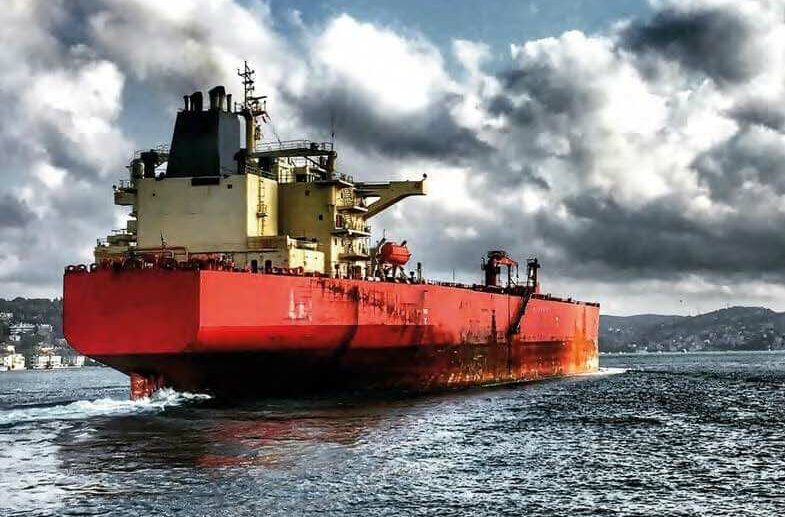
Michael Grey advises seafarers to beware of unscrupulous operators
These are very strange times in the maritime world, with so many uncertainties surrounding issues of international trade, which drive the operations of ships. The baleful presence of the sanctions-evading ‘dark fleet’, with dubious insurance, state of repair and possibly even operating under false flags, is casting an ever-wider shadow. The proliferation of sanctions themselves means that even the most respectable ship operator must be constantly alert to this changing state of affairs, with all their legal implications.
It is perhaps too easy for the seafarer to conclude that all such complications are so far above their pay grades that there is nothing to be done about them. But they can find themselves the ‘collateral damage’ if, for some reason, their ship is caught up in these troubles over sanctions involving the vessel, or its cargo. It is, for instance, not unusual for the seafarer – even senior officers – to have little idea of the beneficial owners of the ship they are sailing on. It is similarly unlikely that they will have much clue about the ownership of the cargo their ship is carrying. Ships can change hands, without the crew being necessarily aware of this, while cargoes have always been bought and sold while in transit.
So, when their ship finds itself detained because of some allegation of ‘sanction-busting’ charges, the crew are likely to find themselves in an unenviable position, possibly even joining the record number of abandoned seafarers, or, in the case of senior officers, facing charges themselves.
Trusted sources
What can seafarers do to mitigate these risks? Some of the more obvious strategies would be, when it is possible, to stay close to the better-known ship and crew managers, whose own vetting systems can be relied upon for both their employees and clients. It would be wise to avoid taking up employment with unknown employers, aboard ships that seem to change hands and flags frequently, and who employ seafarers on a casual basis with few checks. Under no circumstances should a seafarer ever pay an agent for employment and offering vague contract terms.
Should not flag States be rather more careful about the ships they are taking into their registers? One of the ridiculous scandals of the present problems is caused by flag States with no obvious regulatory competence suddenly taking on considerable numbers of large ocean-going ships, with little ability to properly inspect them. Names and flags themselves are changed in an obvious ruse to confuse those attempting to police sanctions. Even more outrageous has been the way in which many of those in control of these ‘ghost’ ships have used completely false flags or non-existent registries to identify themselves, with voyages being taken ‘incognito’ with electronic identities masked or switched off. The position of those aboard such ships, as has been seen with vessels arrested, is exceedingly precarious.
The regular survey undertaken by the International Chamber of Shipping of flag States is publicly available and the latest edition has recently been published. This gives a good indication of both the capability and, by inference, the respectability of national and international ship registers. As a reference document, it does give an overview of the convention status of every flag, and a range of its capabilities. It is a useful indicator and reference for seafarers
1.89 million people work at sea, and with your help we can be there for everyone that needs us.