Resources
A collection of free resources to help you raise funds and share the work we do


About our charity
The Mission to Seafarers provides help to the 1.89 million people who face danger every day to keep our global economy afloat.

What is a seafarer
Support for anyone working in the seafaring industry
Our impact
Providing help for seafarers in over 200 ports around the world.
Our issues
Multiple issues effect Seafarers everyday, learn how we help
Our people
Learn more about the staff that make change happen
Careers
Impacts on the lives of people across the world
Publications
Explore our latest publications, reports, and stories showcasing the impact of our work.

Back
About our charity
The Mission to Seafarers provides help to the 1.89 million people who face danger every day to keep our global economy afloat.
What is a seafarer
Support for anyone working in the seafaring industry
Our impact
Providing help for seafarers in over 200 ports around the world.
Our issues
Multiple issues effect Seafarers everyday, learn how we help
Our people
Learn more about the staff that make change happen
Careers
Impacts on the lives of people across the world
Publications
Explore our latest publications, reports, and stories showcasing the impact of our work.

Where can I get help?
We are here for you 24/7
Download our app
The first digital seafarers’ centre in your pocket.

Find a port
We’re located in over 200 ports in 50 different countries
Family network
Learn more about the community we’re building for seafarers’ families
The Sea
The latest maritime news and safety information for seafarers.
WeCare
An initiative designed to improve the mental health and wellbeing of seafarers
Training
We have a range of e-learning for seafarers and their families
Seafarers happiness index
A platform for seafarers to share their views and be a catalyst for change
Contact our Chaplaincy team
Support for anyone working in the seafaring industry
Back
Where can I get help?
We are here for you 24/7
Download our app
The first digital seafarers’ centre in your pocket
Find a port
We’re located in over 200 ports in 50 different countries
Family network
Learn more about the community we’re building for seafarers’ families
The Sea
The latest maritime news and safety information for seafarers.
WeCare
An initiative designed to improve the mental health and wellbeing of seafarers
Training
We have a range of e-learning for seafarers and their families
Seafarers happiness index
A platform for seafarers to share their views and be a catalyst for change
Contact our Chaplaincy team
Support for anyone working in the seafaring industry

Make a donation
With your help we can be there for everyone that needs us

Events
Learn more about our global programme of events

Legacy
Support us with a legacy gift.
Back
Make a donation
With your help we can be there for everyone that needs us
Events
Learn more about our global programme of events
Legacy
Support us with a legacy gift.
By Michael Grey
It must be quite alarming to discover that a navigation system which you have learned to trust for its unfailing reliability has suddenly misled you. But it is happening quite often, in certain parts of the world, as hackers and spoofing cause serious problems for navigation. And not just on the bridge, because many of the other ship systems that depend upon satellite-borne signals can be similarly interrupted. The Black Sea, eastern Mediterranean, Red Sea and Gulf, and certain parts of the South China Sea have been affected, and those aboard ships in these areas are urged to be on their guard.
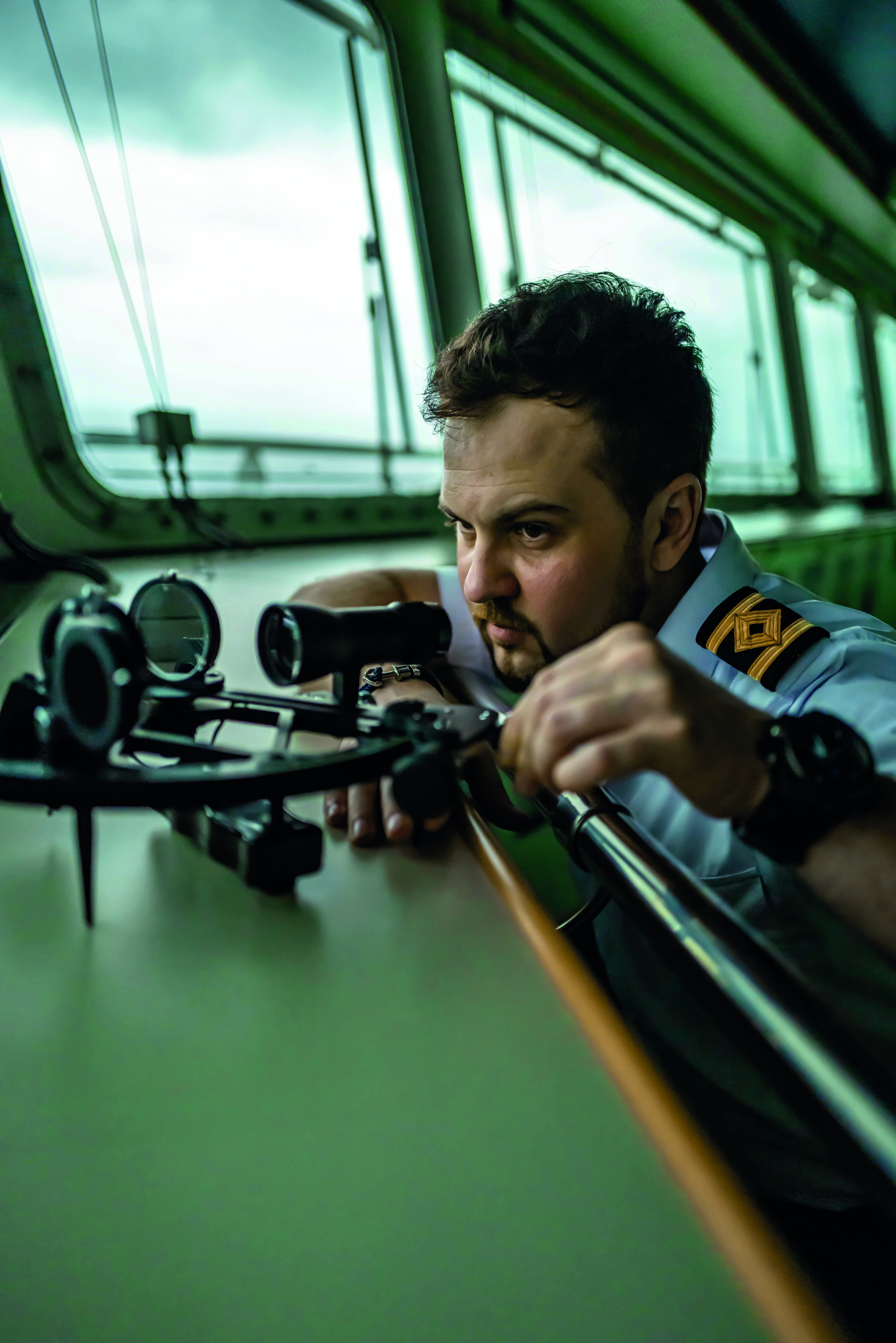
Navigators are told to check their position using other means when in these waters and at least one large ship has come to grief on a shoal as a consequence of this spoofing. Suddenly, lighthouses, compass bearings, radar ranges and even sextants come back into their own. While it might seem something of a backward step after the wonderful convenience of GPS, it is a reminder that the advice to seek a second opinion, and check something as important as the ship’s position is as old as the hills.
Electronic interference, particularly that from malicious sources, may be something new for navigators to contend with, but seamanship has always faced the unexpected. Sunspots – politely termed solar radiation these days – have caused all sorts of problems as their electro-magnetic waves surge around the Earth. Even the faithful magnetic compass could develop unexplained errors; some quite natural and some following the loading of a cargo of iron. Failure to employ a compass adjuster from time to time could be a most unwise economy.
Moving targets
Tidal variations could make a landfall in thick weather problematical – maybe this was spoofing by the moon, or weather systems – leaving those employing dead reckoning confused. Even early forms of radio navigation like the Decca Navigator used half a century ago and thought miraculous in foggy north European waters, could ‘slip’ its lanes and bewilder the user. When employing radar, users have always been trained to be cautious as to what the screen might be showing and what the radar waves might really be bouncing off. Interference and false echoes long pre-date hacking or spoofing. We are told that windfarm arrays have caused surprising ‘ghost’ echoes on radar.
Perhaps forms of spoofing go back even further in maritime history. Wreckers, we are told, would extinguish crucial lights to lure unsuspecting ships onto the shore. It is even said that they would put out false lights or even mount them on the back of a horse, to further confuse those afloat. In wartime, all sorts of strange ruses, like dropping metal foil from aircraft, were used to simulate ships and bewilder enemy radar operators.
Quite who is responsible for this surge in interference with our tried and trusted navigation systems is almost immaterial, but the ease with which relatively weak satellite signals can be distorted is indisputable. It is said that equipment that will interfere with electronics can be bought cheaply online and is employed widely. State-sponsored hackers presumably use more sophisticated weaponry. And while equipment manufacturers are devising counter-measures, the advice to carefully check the ship’s position using more than one source of reference remains, as it has always been, good advice.
1.89 million people work at sea, and with your help we can be there for everyone that needs us.