Resources
A collection of free resources to help you raise funds and share the work we do

About our charity
The Mission to Seafarers provides help to the 1.89 million people who face danger every day to keep our global economy afloat.

What is a seafarer
Support for anyone working in the seafaring industry
Our impact
Providing help for seafarers in over 200 ports around the world.
Our issues
Multiple issues effect Seafarers everyday, learn how we help
Our people
Learn more about the staff that make change happen
Careers
Impacts on the lives of people across the world
Publications
Explore our latest publications, reports, and stories showcasing the impact of our work.

Back
About our charity
The Mission to Seafarers provides help to the 1.89 million people who face danger every day to keep our global economy afloat.
What is a seafarer
Support for anyone working in the seafaring industry
Our impact
Providing help for seafarers in over 200 ports around the world.
Our issues
Multiple issues effect Seafarers everyday, learn how we help
Our people
Learn more about the staff that make change happen
Careers
Impacts on the lives of people across the world
Publications
Explore our latest publications, reports, and stories showcasing the impact of our work.
Where can I get help?
We are here for you 24/7
Download our app
The first digital seafarers’ centre in your pocket.
Find a port
We’re located in over 200 ports in 50 different countries
Family network
Learn more about the community we’re building for seafarers’ families
The Sea
The latest maritime news and safety information for seafarers.
WeCare
An initiative designed to improve the mental health and wellbeing of seafarers
Training
We have a range of e-learning for seafarers and their families
Seafarers happiness index
A platform for seafarers to share their views and be a catalyst for change
Contact our Chaplaincy team
Support for anyone working in the seafaring industry
Back
Where can I get help?
We are here for you 24/7
Download our app
The first digital seafarers’ centre in your pocket
Find a port
We’re located in over 200 ports in 50 different countries
Family network
Learn more about the community we’re building for seafarers’ families
The Sea
The latest maritime news and safety information for seafarers.
WeCare
An initiative designed to improve the mental health and wellbeing of seafarers
Training
We have a range of e-learning for seafarers and their families
Seafarers happiness index
A platform for seafarers to share their views and be a catalyst for change
Contact our Chaplaincy team
Support for anyone working in the seafaring industry
Make a donation
With your help we can be there for everyone that needs us

Events
Learn more about our global programme of events
Legacy
Support us with a legacy gift.
Back
Make a donation
With your help we can be there for everyone that needs us
Events
Learn more about our global programme of events
Legacy
Support us with a legacy gift.
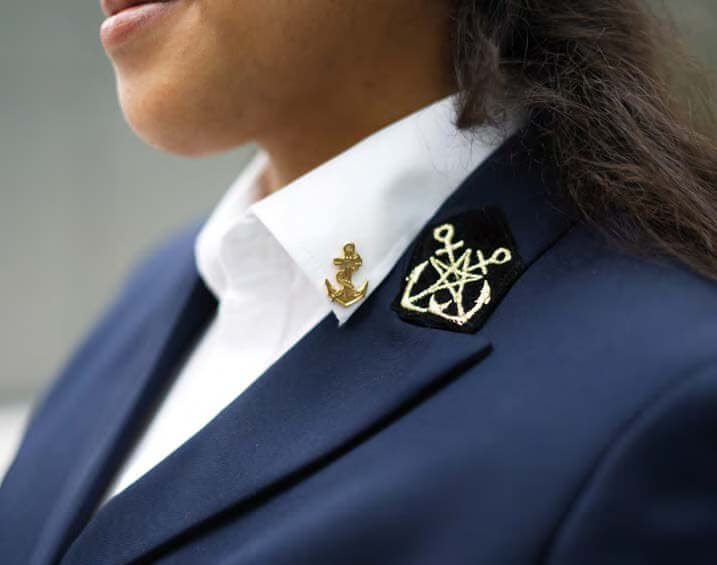
Christine Cabau explains why it needs to be full speed ahead towards gender balance at the helm
In shipping, as in many other industries, women have long had to chart their course in professional environments that were not originally designed for them. I know this well—I have lived it. It is a fact, but it does not need to be fate.
I built my career in a demanding and fascinating world, but one that has long been deeply male dominated. Along the way, I encountered obstacles – sometimes visible, often silent. Projected doubts, implicit glass ceilings, deeply rooted habits. But I also discovered collective strength, forged by committed women and men working together within close-knit teams. From this experience, I gained a firm conviction: competence, rigor and leadership have no gender– and no borders. Neither do passion and commitment.
At CMA CGM, we made a clear choice: to stop merely observing and regretting, and instead to act and transform. Launched in December 2024, the She Sails program was born from this determination. A determination that is both simple and ambitious: to make maritime careers genuinely accessible, attractive and sustainable for women, both on board vessels and onshore.
Examples already exist: female deck officers leading mixed crews, women captains at the helm of French-flagged vessels, female chief engineers at the forefront of technical performance. These pioneers demonstrate that there are no ‘men’s jobs’ at sea—only vocations to support and passions to fully embrace. In just one year, the results are already tangible. The number of women seafarers has more than doubled, rising from 200 in 2024 to 419 as of December 31, 2025.
This collective momentum has been made possible by the strong commitment of Rodolphe Saadé, chairman and CEO of CMA CGM Group, and by the involvement of a united and determined network of ambassadors. Together with all our seafarers – women and men – we will continue on this path, with a new objective now set at 1,000 women seafarers by 2030.
Driving deeper
Beyond the figures, what truly matters are the human journeys behind them.
Since the launch of She Sails, 55 promotions have been achieved, including six to Top Four positions – roles involving governance and high-level responsibility. Forty-eight female cadets have become junior officers, and full career paths – from deck to bridge – are taking shape. This demonstrates one essential truth: when opportunities exist, talent finds its voice.
She Sails goes far beyond recruitment. It is built on an integrated approach combining continuous training through our Tangram Center of Excellence, mentoring, personalised support and leadership development. We actively encourage women to project themselves, to apply and to progress, guided by a fundamental principle: equal opportunities and equal pay for equal roles.
It also means addressing safety on board openly and without complacency – through a zero-tolerance policy on harassment and active listening to crews. It means naming what is often left unsaid, in order to confront it effectively.
Creating lasting change in an industry also requires transforming perceptions. That is why She Sails relies on a global network of 42 ambassadors across 19 countries. Seafarers, officers and department heads all engage directly with maritime schools, female students and young women who may still hesitate. They share, without filters, the realities of the profession and proudly demonstrate that these careers are accessible and offer pathways to the highest levels of responsibility. They embody what is possible.
Visibility is a powerful lever. Showing women on the bridge, in the engine room or on deck is not merely symbolic – it is about building a new normal. There are no technological or operational barriers to women at sea. We need women in these remarkable professions. We need diversity to be stronger, safer and more effective – together.
Today, She Sails is a global program, supported by academic partnerships in India, the Philippines, Indonesia and Abu Dhabi, reflecting the truly international nature of the maritime sector. Each year, it takes part in around thirty international events, creating a genuine ecosystem of support, recognition and knowledge sharing.
I am deeply convinced that gender diversity is a driver of performance, safety and attractiveness for our industry. A maritime community that deprives itself of half of humanity and its talents would be making a strategic mistake. Making the sea a horizon of equality is not only a conviction – it is a condition for success. We need a maritime industry that opens up, trains and trusts, in order to better prepare its future.
She Sails is not an endpoint. It is a movement. And I hope it will inspire far beyond CMA CGM, because the sea belongs to all those – women and men – who choose it as their horizon, their career and their life’s adventure.
1.89 million people work at sea, and with your help we can be there for everyone that needs us.