Resources
A collection of free resources to help you raise funds and share the work we do


About our charity
The Mission to Seafarers provides help to the 1.89 million people who face danger every day to keep our global economy afloat.

What is a seafarer
Support for anyone working in the seafaring industry
Our impact
Providing help for seafarers in over 200 ports around the world.
Our issues
Multiple issues effect Seafarers everyday, learn how we help
Our people
Learn more about the staff that make change happen
Careers
Impacts on the lives of people across the world
Publications
Explore our latest publications, reports, and stories showcasing the impact of our work.

Back
About our charity
The Mission to Seafarers provides help to the 1.89 million people who face danger every day to keep our global economy afloat.
What is a seafarer
Support for anyone working in the seafaring industry
Our impact
Providing help for seafarers in over 200 ports around the world.
Our issues
Multiple issues effect Seafarers everyday, learn how we help
Our people
Learn more about the staff that make change happen
Careers
Impacts on the lives of people across the world
Publications
Explore our latest publications, reports, and stories showcasing the impact of our work.

Where can I get help?
We are here for you 24/7
Download our app
The first digital seafarers’ centre in your pocket.

Find a port
We’re located in over 200 ports in 50 different countries
Family network
Learn more about the community we’re building for seafarers’ families
The Sea
The latest maritime news and safety information for seafarers.
WeCare
An initiative designed to improve the mental health and wellbeing of seafarers
Training
We have a range of e-learning for seafarers and their families
Seafarers happiness index
A platform for seafarers to share their views and be a catalyst for change
Contact our Chaplaincy team
Support for anyone working in the seafaring industry
Back
Where can I get help?
We are here for you 24/7
Download our app
The first digital seafarers’ centre in your pocket
Find a port
We’re located in over 200 ports in 50 different countries
Family network
Learn more about the community we’re building for seafarers’ families
The Sea
The latest maritime news and safety information for seafarers.
WeCare
An initiative designed to improve the mental health and wellbeing of seafarers
Training
We have a range of e-learning for seafarers and their families
Seafarers happiness index
A platform for seafarers to share their views and be a catalyst for change
Contact our Chaplaincy team
Support for anyone working in the seafaring industry

Make a donation
With your help we can be there for everyone that needs us

Events
Learn more about our global programme of events

Legacy
Support us with a legacy gift.
Back
Make a donation
With your help we can be there for everyone that needs us
Events
Learn more about our global programme of events
Legacy
Support us with a legacy gift.
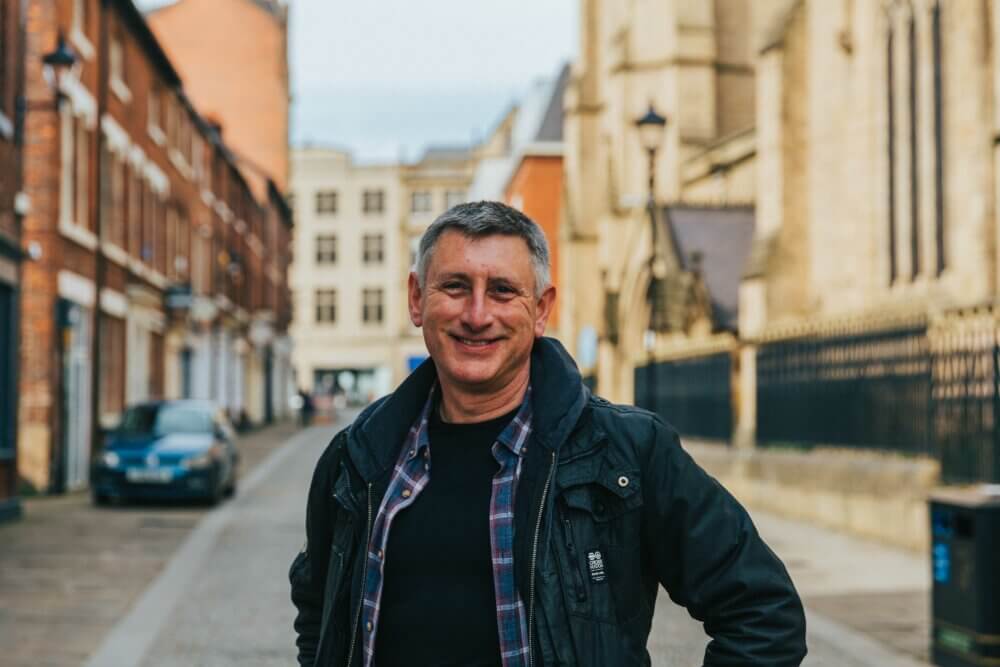
Peter Rouch on finding inner strength when the world around you is in conflict
Many of you reading this may be expecting another article about the situation in the Strait of Hormuz. It is in the news every day. There are many opinions, many reports, many strong words. Some of you may feel tired of hearing about it. And many of you may feel something else too: that this situation is far beyond your control.
It is hard to change what is happening there. It is hard for governments, for companies, and certainly for individual seafarers. As the English thinker Bertrand Russell once said, “War does not decide who is right, only who is left.”
And who is ‘left’ right now includes thousands of seafarers – people like you – continuing your work, often in uncertainty, sometimes in fear, and usually far from home.
If this piece reaches you, please know this: you are not forgotten. Your life matters. Your hopes, your worries, your families, your future – all of these matter. The Mission to Seafarers, and many others around the world, are thinking of you and standing alongside you, even when we cannot change the situation itself.
Some of you may be receiving extra support from your companies – better internet access, higher pay, more ways to stay connected or distracted during long and stressful days. These things can help. But we also know that many of you are not receiving these benefits. For many, the days are still long, the risks still present, and the sense of waiting still heavy.
So, what can we do when we face situations we cannot change? This is not only a question for those in the Strait of Hormuz. In many ways, it is a question for all seafarers. Life at sea is often shaped by things outside your control – weather, schedules, contracts, decisions made far away. You cannot always change these things. But there is one place where you may still have some choice: in how you respond.
This is not easy. It does not remove danger or difficulty. But it can help you carry those difficulties in a different way.
Coping techniques
Around the world, across many cultures and religions, people have developed simple practices to help them stay calm, focused, and strong in hard times. Some call these practices mindfulness. Some call them meditation. Some call them prayer. The names are different, but the purpose is similar: to find a small space of quiet and strength within yourself, even when the world outside is uncertain.
At The Mission to Seafarers, we serve people of all faiths and none. We do not ask what you believe. We are here to support you as you are. But we also know that many seafarers draw strength from their beliefs. In fact, when we asked seafarers last year, 78% told us that their faith was crucial in helping them face life’s challenges.
With that in mind, here is a simple practice you might try. It does not require special equipment. It does not depend on any one religion. You can adapt it to your own beliefs or simply use it as a way to rest your mind.
1. Find a quiet place
Choose a place where you are unlikely to be disturbed. It does not have to be perfect. Even a small, quiet corner will do.
2. Sit comfortably
Sit in a relaxed but upright position. Let your hands rest naturally. You can close your eyes or simply look softly at one spot.
3. Focus on your breathing
Take slow, steady breaths. Do not try to control your breathing too much. Just notice it – air coming in, air going out. Let your body begin to relax.
4. Use a simple word
You may find it helpful to repeat a quiet word in your mind. This could be something from your own faith, such as ‘peace’, or ‘mercy’. Or it could be a simple word that matters to you, like ‘calm’, ‘strength’, or ‘hope’.
5. Let your thoughts come and go
Your mind will not stay quiet. Thoughts will come – about work, home, worries, plans. This is normal. Do not fight them, but do not follow them. Just notice them, and then gently return your attention to your breathing or your chosen word.
6. Rest in the moment
For a few minutes, allow yourself simply to be. You do not need to solve problems or make decisions. This is a time to pause, to breathe, and to reconnect with yourself and what matters most to you.
7. Finish slowly
After 5 to 15 minutes, gently bring your attention back to your surroundings. You may wish to end with a quiet moment of gratitude – however you understand that in your own life.
If you try this once, it may feel unfamiliar. That is normal. The benefit usually comes with regular practice – even just a few minutes each day. Over time, it can become easier to find that quiet space inside yourself.
This practice will not change the situation around you. It will not remove danger or difficulty. But it may help you to respond with more calmness, more clarity, and more strength. And sometimes, that can make a real difference in how we endure hard times.
There are moments in life when we can act to change our situation. And there are times when we cannot. In those moments, how we respond – inside ourselves – can be an important part of how we get through.
Again, thinking of Russell’s words: it is not enough that you are simply ‘left’ when difficult times pass. Our hope for you is something more than that. Our hope is that you will come through these challenges with your strength intact, standing alongside your crewmates, supporting one another as you always do.
Wherever you are sailing, you are not alone. We are here to listen. We are here to support. And we are here to walk alongside you – on every journey.
The Ven Dr Peter Rouch is the secretary general of The Mission to Seafarers.
1.89 million people work at sea, and with your help we can be there for everyone that needs us.