Resources
A collection of free resources to help you raise funds and share the work we do


About our charity
The Mission to Seafarers provides help to the 1.89 million people who face danger every day to keep our global economy afloat.

What is a seafarer
Support for anyone working in the seafaring industry
Our impact
Providing help for seafarers in over 200 ports around the world.
Our issues
Multiple issues effect Seafarers everyday, learn how we help
Our people
Learn more about the staff that make change happen
Careers
Impacts on the lives of people across the world
Publications
Explore our latest publications, reports, and stories showcasing the impact of our work.

Back
About our charity
The Mission to Seafarers provides help to the 1.89 million people who face danger every day to keep our global economy afloat.
What is a seafarer
Support for anyone working in the seafaring industry
Our impact
Providing help for seafarers in over 200 ports around the world.
Our issues
Multiple issues effect Seafarers everyday, learn how we help
Our people
Learn more about the staff that make change happen
Careers
Impacts on the lives of people across the world
Publications
Explore our latest publications, reports, and stories showcasing the impact of our work.

Where can I get help?
We are here for you 24/7
Download our app
The first digital seafarers’ centre in your pocket.

Find a port
We’re located in over 200 ports in 50 different countries
Family network
Learn more about the community we’re building for seafarers’ families
The Sea
The latest maritime news and safety information for seafarers.
WeCare
An initiative designed to improve the mental health and wellbeing of seafarers
Training
We have a range of e-learning for seafarers and their families
Seafarers happiness index
A platform for seafarers to share their views and be a catalyst for change
Contact our Chaplaincy team
Support for anyone working in the seafaring industry
Back
Where can I get help?
We are here for you 24/7
Download our app
The first digital seafarers’ centre in your pocket
Find a port
We’re located in over 200 ports in 50 different countries
Family network
Learn more about the community we’re building for seafarers’ families
The Sea
The latest maritime news and safety information for seafarers.
WeCare
An initiative designed to improve the mental health and wellbeing of seafarers
Training
We have a range of e-learning for seafarers and their families
Seafarers happiness index
A platform for seafarers to share their views and be a catalyst for change
Contact our Chaplaincy team
Support for anyone working in the seafaring industry

Make a donation
With your help we can be there for everyone that needs us

Events
Learn more about our global programme of events

Legacy
Support us with a legacy gift.
Back
Make a donation
With your help we can be there for everyone that needs us
Events
Learn more about our global programme of events
Legacy
Support us with a legacy gift.
By Simon Hodgkinson
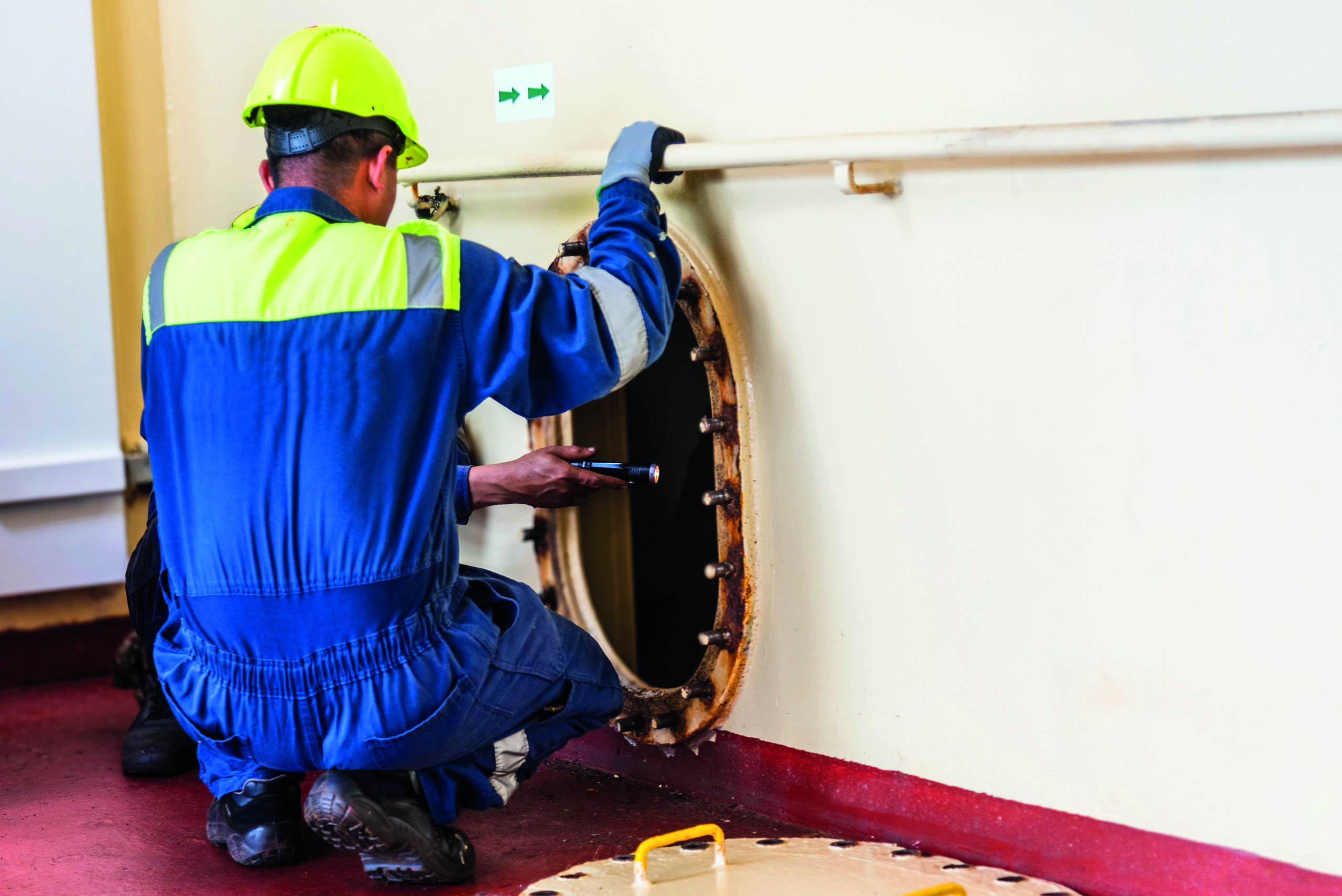
Every year, experienced seafarers continue to lose their lives in enclosed spaces. Despite decades of guidance, training, and awareness campaigns, enclosed space entry remains one of the most persistent and preventable causes of death at sea.
According to InterManager data submitted to the IMO, at least 224 seafarers and 86 shore workers have died in enclosed-space incidents since 1996. In 2023 alone, 34 people lost their lives – almost double that of 2022 – and data since suggest the trend remains deeply concerning. Many of those lost were senior officers who entered with the best of intentions but never came back out.
An enclosed space is any area with limited openings, inadequate ventilation, and not designed for continuous occupancy – from ballast tanks and cofferdams to chain lockers, cargo holds, and duct keels.
The primary hazard is the atmosphere. Oxygen depletion, toxic gases, and flammable vapours can build up unnoticed, creating an invisible threat. Even a small drop in oxygen levels can cause dizziness, confusion, and rapid collapse; below 12%, unconsciousness occurs within seconds. Gases such as hydrogen sulphide, carbon monoxide, or methane may also be present, often without any smell or visible sign.
In some cases, deaths occur not only because a crew member entered a space without testing, but because others rushed in to help. Over half of enclosed-space fatalities are would-be rescuers. Instinct can easily override training when a colleague appears to be in danger, but entering without proper equipment only compounds the tragedy.
Culture saves lives
Every vessel’s Safety Management System (SMS) contains enclosed-space entry procedures, risk assessments, checklists and bimonthly drills. Still, incidents persist because procedures alone are not enough. The root cause is often complacency, or external pressures that make safe practice harder to sustain.
Industry surveys reveal frustration among crews over unrealistic time pressures and poorly designed spaces that cannot be ventilated or tested properly. Some seafarers likened the drive to complete tasks quickly as “bullying on an industrial scale”, while others said blame culture discourages open discussion of what went wrong. These findings underline a simple truth: safety depends as much on leadership and design as it does on training.
That’s why toolbox meetings and task-specific safety briefs are so vital. They refresh awareness, clarify roles, and create space for open communication. Everyone, from junior deckhands to senior officers, must feel able to question unsafe practices without fear of reprisal.
Enclosed-space safety is a core part of West’s Loss Prevention programme. This year, our team released a new animation inspired by real incidents and crew feedback. It’s designed to remind rather than reprimand, encouraging crews to stop, look, and think before entering any space that may be unsafe. We also continue to publish detailed Loss Prevention Bulletins, providing practical guidance on gas testing, ventilation, and rescue procedures.
Technology will continue to transform maritime operations, but there is no substitute for vigilance and shared accountability. Every life lost in an enclosed space is one too many, and the only acceptable number is zero.
At West, we stand with seafarers in reinforcing the fundamentals: understanding, awareness, and action. If you ever feel uncertain about entering a space, take a moment to stop, test, and talk. No task, however urgent, is worth a life.
By keeping safety at the heart of every operation, we can make sure everyone who steps on board also steps safely home.
1.89 million people work at sea, and with your help we can be there for everyone that needs us.