



Resources
A collection of free resources to help you raise funds and share the work we do


About our charity
The Mission to Seafarers provides help to the 1.89 million people who face danger every day to keep our global economy afloat.

What is a seafarer
Support for anyone working in the seafaring industry
Our impact
Providing help for seafarers in over 200 ports around the world.
Our issues
Multiple issues effect Seafarers everyday, learn how we help
Our people
Learn more about the staff that make change happen
Careers
Impacts on the lives of people across the world
Publications
Explore our latest publications, reports, and stories showcasing the impact of our work.

Back
About our charity
The Mission to Seafarers provides help to the 1.89 million people who face danger every day to keep our global economy afloat.
What is a seafarer
Support for anyone working in the seafaring industry
Our impact
Providing help for seafarers in over 200 ports around the world.
Our issues
Multiple issues effect Seafarers everyday, learn how we help
Our people
Learn more about the staff that make change happen
Careers
Impacts on the lives of people across the world
Publications
Explore our latest publications, reports, and stories showcasing the impact of our work.

Where can I get help?
We are here for you 24/7
Download our app
The first digital seafarers’ centre in your pocket.

Find a port
We’re located in over 200 ports in 50 different countries
Family network
Learn more about the community we’re building for seafarers’ families
The Sea
The latest maritime news and safety information for seafarers.
WeCare
An initiative designed to improve the mental health and wellbeing of seafarers
Training
We have a range of e-learning for seafarers and their families
Seafarers happiness index
A platform for seafarers to share their views and be a catalyst for change
Contact our Chaplaincy team
Support for anyone working in the seafaring industry
Back
Where can I get help?
We are here for you 24/7
Download our app
The first digital seafarers’ centre in your pocket
Find a port
We’re located in over 200 ports in 50 different countries
Family network
Learn more about the community we’re building for seafarers’ families
The Sea
The latest maritime news and safety information for seafarers.
WeCare
An initiative designed to improve the mental health and wellbeing of seafarers
Training
We have a range of e-learning for seafarers and their families
Seafarers happiness index
A platform for seafarers to share their views and be a catalyst for change
Contact our Chaplaincy team
Support for anyone working in the seafaring industry

Make a donation
With your help we can be there for everyone that needs us

Events
Learn more about our global programme of events

Legacy
Support us with a legacy gift.
Back
Make a donation
With your help we can be there for everyone that needs us
Events
Learn more about our global programme of events
Legacy
Support us with a legacy gift.
November 2025
The reality for seafarers today is that time ashore is scarce. The Port of Houston is huge – one of the largest in the US by tonnage, with around 200 terminals stretching along the ship channel.
The Houston International Seafarers’ Centre was established back in 1963, with basketball courts, a small store, and Wi-Fi. But every moment in port costs money, and ships either want to leave quickly or wait at anchor, so fewer get to visit.
And when they’re in port or out at anchorage, in those one or two days, everyone comes knocking – the Coast Guard, Border Patrol, inspectors, agents, provision suppliers. By the time I arrive, the crew is often tired, but unlike everyone else, I come on board with no agenda.
One of the biggest challenges I see now is de-socialisation. In their downtime, many seafarers no longer gather in the rec room or mess hall. Instead, they stay in their cabins – where loneliness and anxiety can creep in.
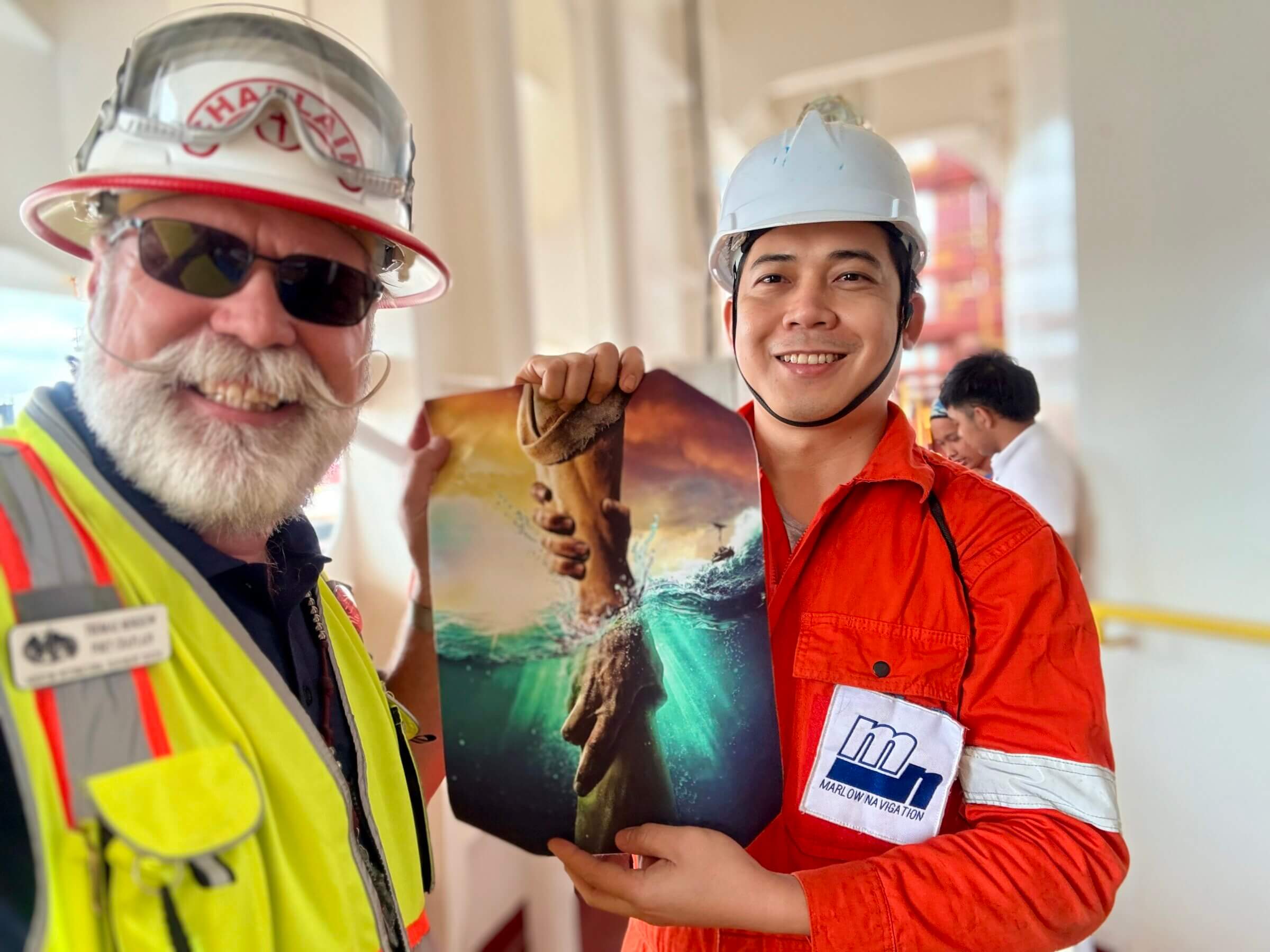
That’s where music has been a breakthrough for me. Filipino crews in particular love it. Pretty much every Filipino seafarer I’ve met can play guitar, so I began buying old guitars, getting them fixed up, and taking them on board. I try to give away a guitar or two each month.
It’s incredible to watch the transformation. You start playing music and the effect is magical – everyone comes out and suddenly there’s laughter, conversation, and community again.
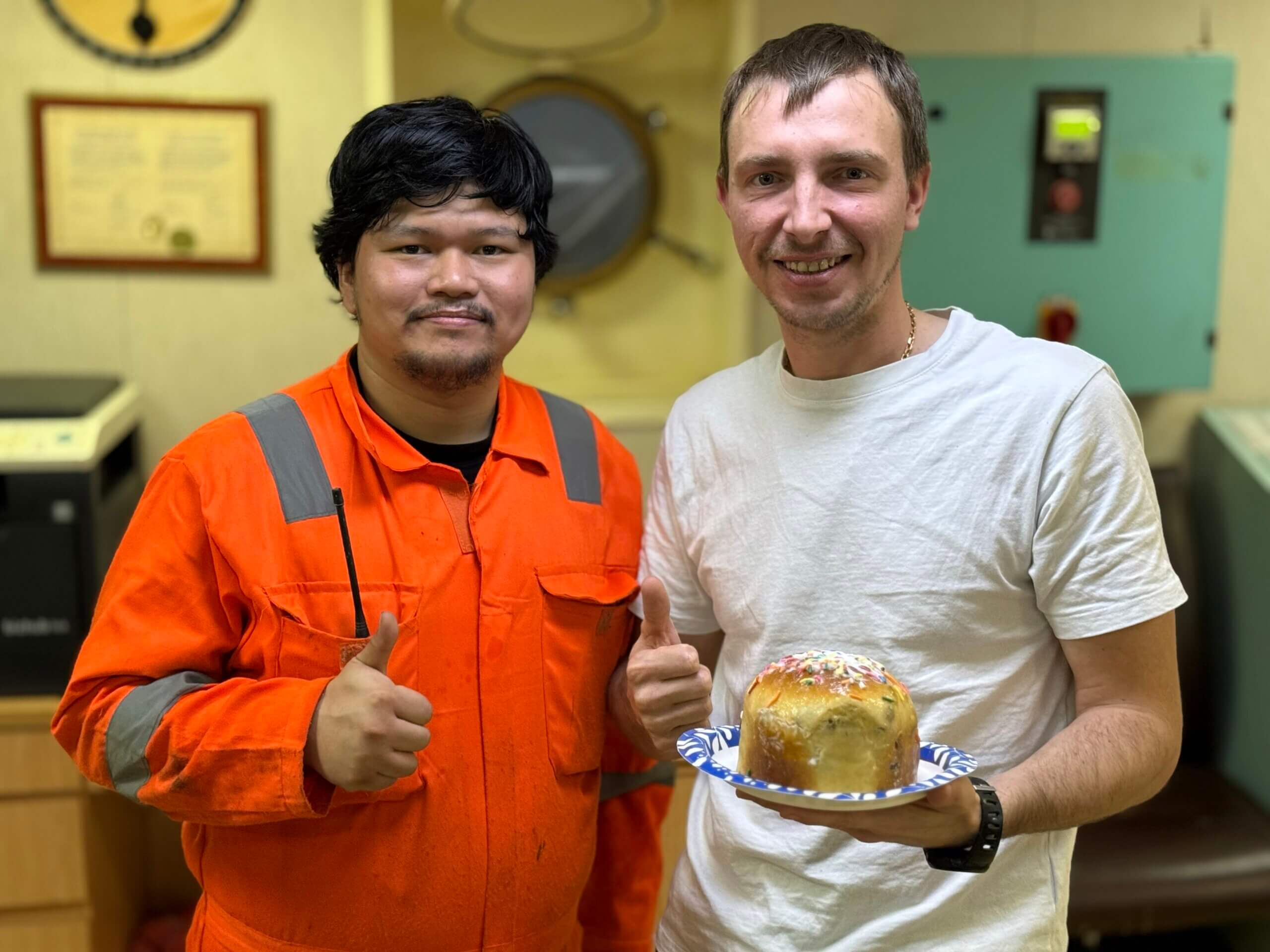
With other crews, connection takes a different form. For Chinese seafarers, for instance, I like to bring Chūn Lián (the red paper blessings that are part of Chinese New Year), because they can’t get them on ships. For Russian, Latvian, or Ukrainian crews, I’ve learned about Paska, the traditional Easter bread. My wife bakes it, I take it on board, and it means the world to them.
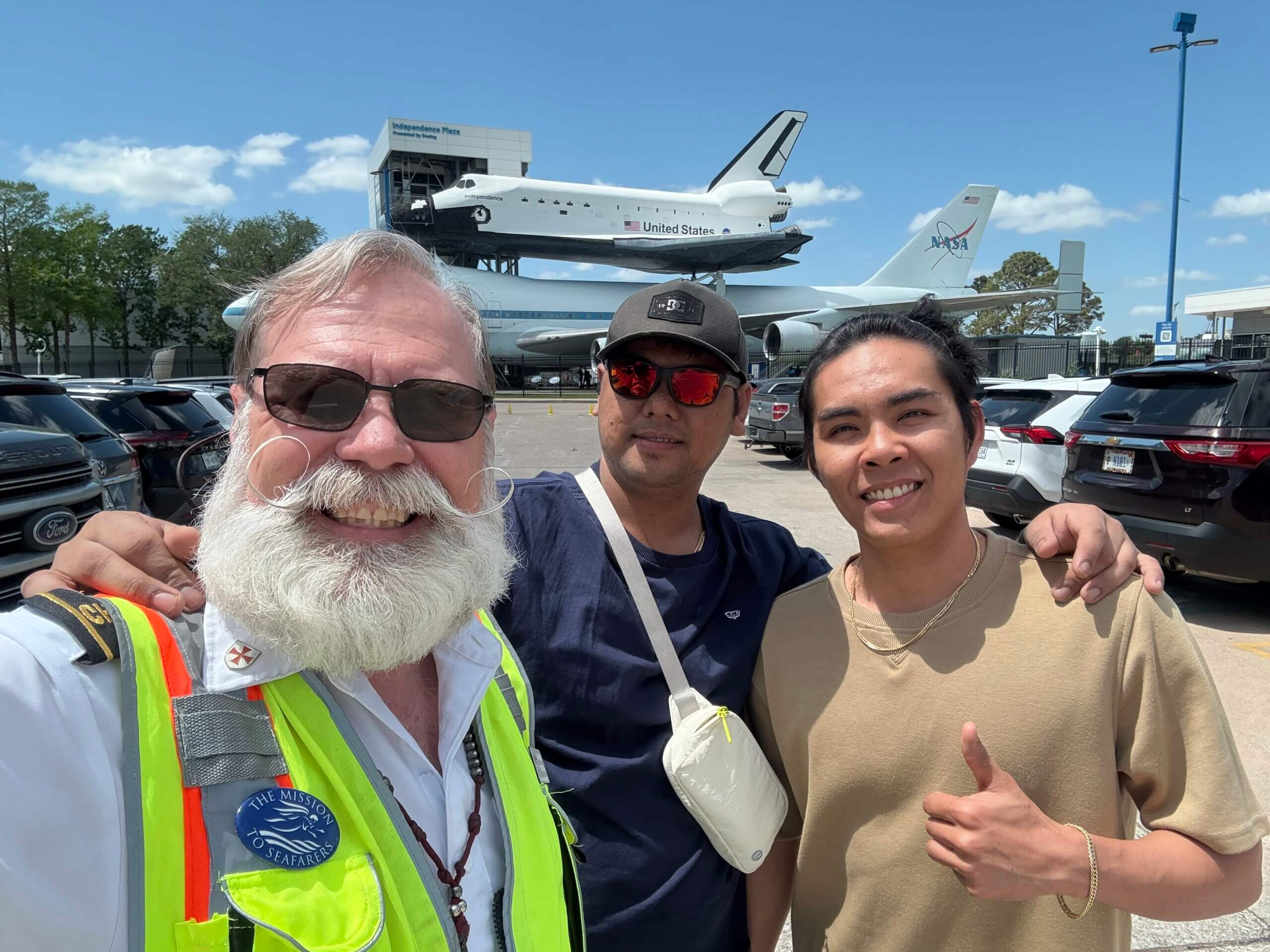
And, as a guy who has a slight resemblance to Santa Claus, Christmas is also a great time to connect. Every year we give out around 10,000 Christmas boxes with gifts donated by local organisations. I go on board dressed up and sing Jingle Bells – it brings such joy.
Small gestures like these show seafarers that they are valued, but they also open the door for heavier conversations. I’ll never forget the day a Ukrainian captain broke down in tears. His mother had just been killed, and he had no one on board to turn to.
That moment reminded me why I do this. I don’t come on board with a remit; I come simply to listen, to care, and to adapt in whatever way I can. That, for me, is what it means to be a port chaplain.
1.89 million people work at sea, and with your help we can be there for everyone that needs us.