Resources
A collection of free resources to help you raise funds and share the work we do


About our charity
The Mission to Seafarers provides help to the 1.89 million people who face danger every day to keep our global economy afloat.

What is a seafarer
Support for anyone working in the seafaring industry
Our impact
Providing help for seafarers in over 200 ports around the world.
Our issues
Multiple issues effect Seafarers everyday, learn how we help
Our people
Learn more about the staff that make change happen
Careers
Impacts on the lives of people across the world
Publications
Explore our latest publications, reports, and stories showcasing the impact of our work.

Back
About our charity
The Mission to Seafarers provides help to the 1.89 million people who face danger every day to keep our global economy afloat.
What is a seafarer
Support for anyone working in the seafaring industry
Our impact
Providing help for seafarers in over 200 ports around the world.
Our issues
Multiple issues effect Seafarers everyday, learn how we help
Our people
Learn more about the staff that make change happen
Careers
Impacts on the lives of people across the world
Publications
Explore our latest publications, reports, and stories showcasing the impact of our work.

Where can I get help?
We are here for you 24/7
Download our app
The first digital seafarers’ centre in your pocket.

Find a port
We’re located in over 200 ports in 50 different countries
Family network
Learn more about the community we’re building for seafarers’ families
The Sea
The latest maritime news and safety information for seafarers.
WeCare
An initiative designed to improve the mental health and wellbeing of seafarers
Training
We have a range of e-learning for seafarers and their families
Seafarers happiness index
A platform for seafarers to share their views and be a catalyst for change
Contact our Chaplaincy team
Support for anyone working in the seafaring industry
Back
Where can I get help?
We are here for you 24/7
Download our app
The first digital seafarers’ centre in your pocket
Find a port
We’re located in over 200 ports in 50 different countries
Family network
Learn more about the community we’re building for seafarers’ families
The Sea
The latest maritime news and safety information for seafarers.
WeCare
An initiative designed to improve the mental health and wellbeing of seafarers
Training
We have a range of e-learning for seafarers and their families
Seafarers happiness index
A platform for seafarers to share their views and be a catalyst for change
Contact our Chaplaincy team
Support for anyone working in the seafaring industry

Make a donation
With your help we can be there for everyone that needs us

Events
Learn more about our global programme of events

Legacy
Support us with a legacy gift.
Back
Make a donation
With your help we can be there for everyone that needs us
Events
Learn more about our global programme of events
Legacy
Support us with a legacy gift.
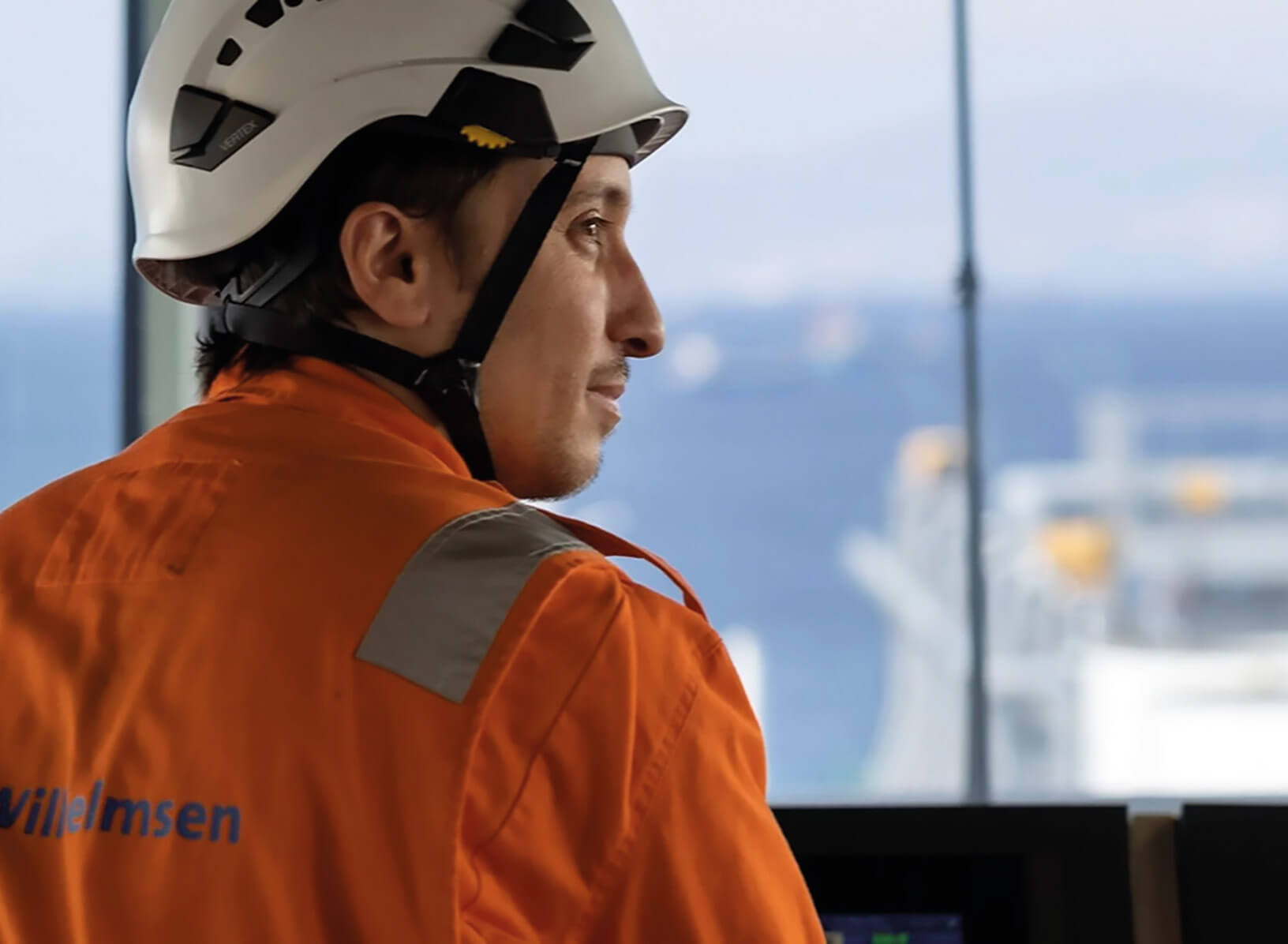
WSM’s Håkon Lenz explains why the human element will remain at the heart of shipping
By Carly Fields
For Håkon Lenz, president and CEO of Wilhelmsen Ship Management (WSM), the future of shipping will be shaped by technology, automation and artificial intelligence. Yet despite rapid technological change, he remains convinced that competent seafarers will continue to be the industry’s most important asset.
Having risen from a technical background as a naval architect to lead one of the world’s largest ship management companies, Lenz brings an engineer’s perspective to an industry wrestling with recruitment challenges, skills shortages and evolving workforce expectations.
According to Lenz, that technical foundation has proven invaluable in understanding what life at sea demands and how employers can better support the people who keep vessels operating safely and efficiently.
“As an engineer, you are trained to think in a structured way,” he says to The Sea. “In my case, with years of operational experience in addition to my educational background, it makes it easier to understand seafarers’ needs and what creates positive working conditions.”
That understanding, he argues, underpins WSM’s approach to attracting and retaining talent. Rather than competing solely on pay, the company focuses on creating long-term career opportunities and a supportive employment culture.
“We strive to be an excellent employer where you are treated well, can grow, and can stay throughout your career,” Lenz says.
Skills search
The challenge of retaining talent has become increasingly important as the maritime industry debates concerns around global crewing shortages. While many industry stakeholders highlight recruitment pressures, Lenz offers a more measured assessment.
“Despite the sentiment being around shortages, we always have a healthy crew recruitment pipeline,” he says. However, he notes that the issue is less about finding people and more about ensuring access to suitably skilled and qualified personnel. WSM’s decision to establish an office in Kenya reflects that strategy.
“The competence remains a key necessity, which is why we opened our office in Kenya,” he explains. “You cannot simply pay your way out of this; it is about finding good people, and we do.”
Importantly, Lenz says WSM has not yet encountered situations where it has been unable to crew a vessel. One area where the industry continues to face significant challenges is gender diversity, particularly when it comes to encouraging more women to build long-term careers at sea.
For Lenz, the largest obstacle is not recruitment but retention.
“I believe the biggest challenge is finding good solutions for when a woman in seafaring wants to start a family,” he says. To address this issue, WSM is testing pathways that allow female seafarers to transition into shore-based roles during key stages of their family lives. While not a perfect solution, Lenz believes it offers a practical way of retaining valuable maritime experience within the organisation.
“We are currently testing transitioning from being a seafarer to having office work,” he says. “That can help, but it is not always easy, especially if you want to return to sea once the children are a little older.”
The company has also established a dedicated committee focused on tackling these challenges and identifying opportunities to make careers at sea more accessible.
“There are ways to ensure that everyone who wants to work at sea can do so,” Lenz says. “For now, onshore work is often the best solution.”
Seafarer retention
The wider question of career attractiveness remains central to shipping’s future, especially as seafarers contend with geopolitical tensions, piracy risks, welfare concerns and the ongoing problem of vessel abandonment in some parts of the world.
For Lenz, the answer lies in employers focusing relentlessly on safety, wellbeing and professional development.
“It is about being a good employer and making sure the safety of our crew is always our main priority,” he says.
He points to the importance of comprehensive training, clear career progression opportunities, fair remuneration and supportive working environments.
“It is about training, career paths, proper wages paid on time, safe and positive working environments, looking after mental wellbeing, and reducing risk to ensure that working with us remains attractive and rewarding,” he explains.
Lenz also acknowledges that standards vary significantly across the maritime sector.
“Our industry needs strong industry practices with sound and attractive conditions,” he says. “Sadly, this is not always the case out there in the global maritime industry given the very unfortunate stories we know exist.”
Alongside welfare and retention, culture has become another major focus for ship managers. WSM has publicly adopted a zero-tolerance approach to bullying and harassment, but Lenz stresses that policies alone are insufficient.
“We take every single whistleblower case seriously,” he says. “We follow up, investigate them all.”
The company regularly discusses these issues at officers’ conferences, during town halls and vessel visits, and through internal communication channels.
“The policy is one thing but taking action and using everyday-language and examples to improve behaviour is our key action point,” Lenz says.
Training is another area where WSM has invested heavily, particularly through digital learning tools. The company’s WLearn micro-learning platform has attracted significant attention across the maritime sector as operators seek more flexible approaches to skills development.
Lenz says that the platform’s growth has exceeded earlier expectations.
“WLearn has actually seen over 350,000 sessions completed so far,” he says. “We are naturally very excited about this development.”
The success of the programme reflects changing attitudes toward training delivery, with shorter, on-demand learning modules becoming increasingly popular among seafarers.
“Micro-learning and short programmes are here to stay. No doubt,” Lenz says. “New knowledge and experience can be distributed more efficiently in this user-friendly format.”
However, he rejects suggestions that digital learning will entirely replace traditional classroom instruction.
Highlighting developments such as virtual bridge training, Lenz argues that technology can significantly enhance learning outcomes while still preserving the value of human interaction.
“We will need both micro and classroom training going forward, they complement each other,” he says.
Automation realities
The same philosophy shapes his views on automation. Despite increasing investment in autonomous technologies and remote operations, Lenz believes the pace of change is often overstated, particularly in deep-sea shipping.
“By 2030, we believe the effects of automation will mainly be seen in short-sea shipping,” he says.
Even in sectors where automation advances most rapidly, he expects people to remain firmly involved in vessel operations, with some responsibilities shifting ashore to remote-control centres rather than disappearing altogether.
“For deep-sea shipping, we see automation continuously being introduced to make the seafarer more efficient but not replace competent and experienced crew,” Lenz says.
Artificial Intelligence forms a key part of that evolution. While public discussion often focuses on transformational disruption, Lenz takes a more practical view of AI’s role in maritime operations.
“AI is excellent for troubleshooting, finding regulations, and helping people work faster within existing workflows,” he says. “It can make work both quicker and more accurate.”
Ultimately, however, Lenz remains convinced that shipping’s future will continue to depend on highly skilled people. Technological advances may reshape how work is performed, but they will not eliminate the need for professional judgement, experience and competence at sea.
“There will always be a need for competent seafarers,” he says. “You are the spine of the maritime industry and the backbone of global trade.”
He notes that vessels being delivered today are expected to operate for decades and are being designed with crews firmly in mind.
“Deep-sea vessels especially are designed with people on board in mind, using technology as supplements to competence and experience,” Lenz says.
As shipping enters an era of rapid technological transformation, he believes the profession itself is becoming more interesting rather than less relevant.
“Equipment and technology are becoming more advanced. In this profession, it’s about staying updated and making sure we are all on top of change,” he says. “We believe this is an exciting profession going forward.”
For seafarers navigating that future, Lenz ends with a simple message that cuts through discussions of technology, automation and industry change. “Please continue to take care of each other,” he says. “Create good working environments. For yourself and for each other.”
1.89 million people work at sea, and with your help we can be there for everyone that needs us.